
If you’re towing a caravan off sealed roads, it’s not a question of whether you’ll get bogged. It’s when. A soft sand track, a muddy campsite after rain, a river crossing that looked shallower than it was. Recovery tracks are the simplest, safest way to get yourself out without needing another vehicle, a winch, or a phone call to roadside assist that won’t connect because you’re 200km from the nearest tower.
The concept is simple: slide the tracks under your driven wheels, apply gentle throttle, and the aggressive teeth grip both the tyre tread and the ground to give you the traction to crawl out. One person, no special skills, no drama. They’re also useful as ramps over rocks, bridging over ruts, and (in a pinch) as a makeshift shovel.
The market is dominated by two Australian-made brands, MaxTrax and TRED, with a handful of budget alternatives worth considering. Here’s how they compare and which ones are worth your money.
What To Look For
Weight Rating
Recovery tracks are rated by the maximum vehicle weight they can support. Most full-size boards are rated to 4,500kg, which covers virtually any tow vehicle and caravan combination. Lighter/compact boards are typically rated to 3,500kg, which is fine for unladen vehicles but may be marginal when you’re loaded up for the Big Lap. Check your vehicle’s GVM and buy accordingly.
Length
Longer boards give your tyres more distance to build momentum before hitting the end of the track. Full-size boards sit around 1,100-1,150mm. Compact versions are 800-900mm. For towing, go full-size: the extra weight and bulk you’re dragging along means you need every millimetre of traction to get moving.
Material
The best boards are made from engineering-grade reinforced nylon. This material flexes under load without snapping, resists UV degradation (critical when they’re mounted on your roof rack in the Australian sun for months), and the teeth maintain their grip even after repeated use. Budget boards use polypropylene or generic plastics, which are stiffer, more brittle in cold weather, and wear faster.
Tooth Pattern
The teeth on the top surface need to grip your tyre tread, and the teeth on the bottom need to dig into the terrain. More teeth generally means better grip. MaxTrax MKII has 88 teeth across 1,150mm. The pattern matters too: some brands engineer their tooth profiles to specifically engage with the water evacuation channels on common tyre treads.
UV Resistance
Your recovery tracks will spend most of their life strapped to your roof rack in direct sun. Cheap boards fade, become brittle, and crack within a year or two. Quality boards use UV-stabilised materials that maintain their strength and flexibility over years of sun exposure.
If you’re towing, carry at least one full-size pair for the tow vehicle. If you’re going seriously off-road (Cape York, the Kimberley, Simpson Desert), carry two pairs so you can leapfrog them under both wheels, or recover both the vehicle and the van if needed.
Our Top Picks
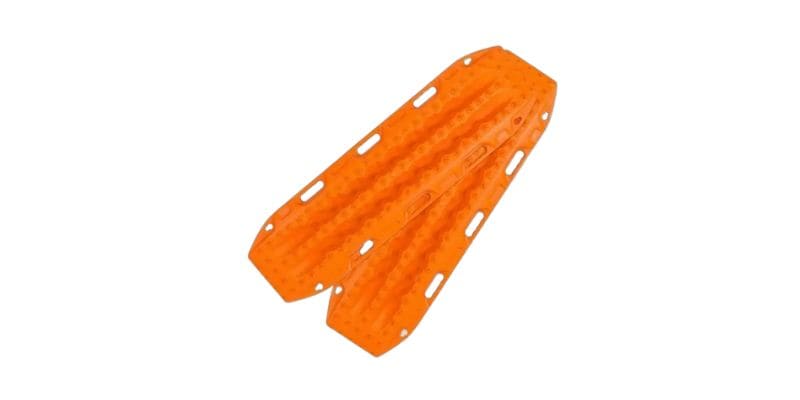
✔ Pros
- The original and still the best overall performer
- Proprietary nylon blend is incredibly tough and flexible
- Double-ramp design works from either end
- Australian made, lifetime warranty
- Massive aftermarket accessory ecosystem (mounts, pins, bags)
✗ Cons
- Premium price (though regularly on sale)
- Heavier than compact alternatives
- Available in many colours, which is fun but doesn’t affect performance
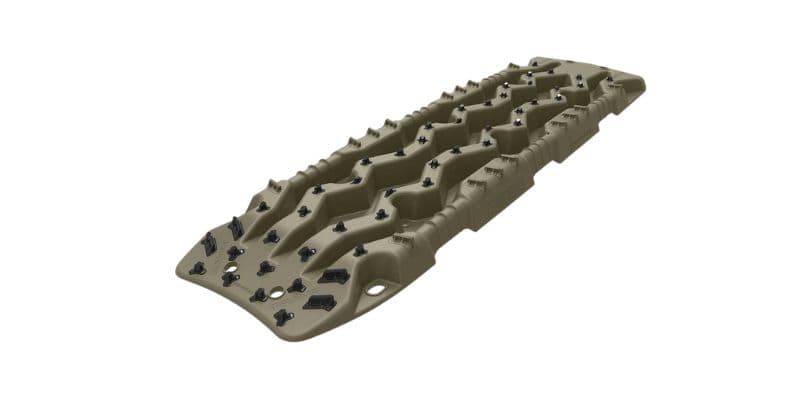
✔ Pros
- EXOTRED teeth resist wear from wheelspin better than competitors
- Directional grip profile is genuinely clever engineering
- Australian made, lifetime warranty
- Good range of accessories and mounting options
✗ Cons
- Slightly heavier than MaxTrax MKII (4.1kg vs 3.4kg)
- Single-ramp design (only works one way)
- Smaller aftermarket ecosystem than MaxTrax
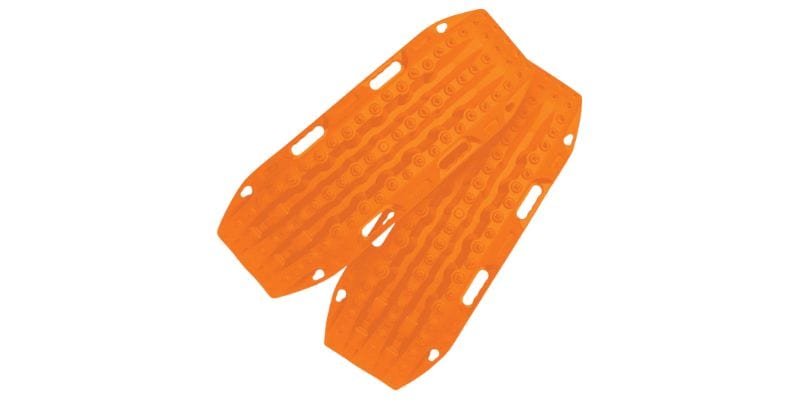
✔ Pros
- 48% lighter than the MKII
- Easier to store in smaller setups
- Still carries the MaxTrax lifetime warranty
- Stacks and links with MKII boards
- Lower price point
✗ Cons
- Lower weight rating (3,500kg vs 4,500kg)
- Shorter board gives less traction distance
- Made from impact-resistant thermoplastic, not the MKII’s reinforced nylon
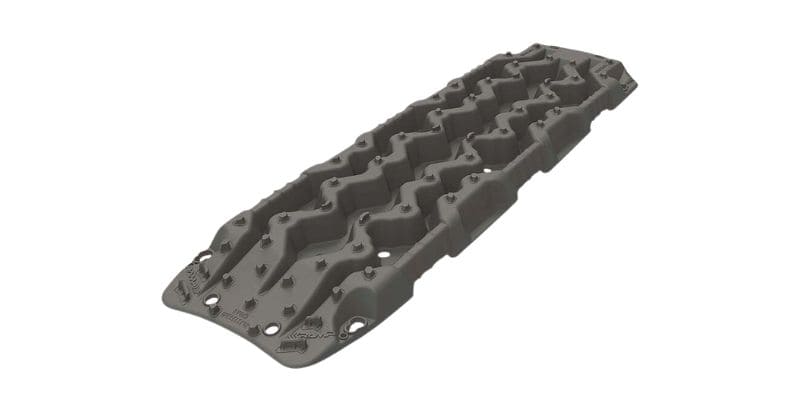
✔ Pros
- Excellent price for a quality Australian brand
- Still carries TRED’s lifetime warranty
- Good enough for most non-extreme conditions
✗ Cons
- Polypropylene is less flexible than nylon (more brittle in cold)
- Not rated for sub-zero temperatures
- Will wear faster under repeated heavy use
Budget Options
If you’re on a tight budget, there are cheaper options from house brands. They work, but with caveats.
Dune 4WD Recovery Tracks (~$80-120) are Anaconda’s house brand. Shorter than premium boards and made from less robust materials, but for the price, they’re a reasonable backup option for lighter vehicles and infrequent use. They won’t survive the kind of punishment that MaxTrax or TRED boards shrug off, but they’re infinitely better than having nothing when you’re bogged on a beach with the tide coming in.
Ridge Ryder Recovery Tracks are Supercheap Auto’s house brand offering. Similar story to Dune 4WD: fine for occasional use, but don’t expect the same longevity or performance as the premium Australian-made options.
Exitrax (~$150-250 depending on model) are Australian-designed boards that sit between budget and premium. The Ultimate 1110 series has developed a decent following and comes with a lifetime warranty. Worth a look if you want something better than a house brand but can’t stretch to MaxTrax or TRED Pro pricing.
Avoid unbranded recovery tracks from marketplace sellers and discount import sites. They look similar to quality boards, but the materials are inferior. Cheap boards have been known to snap under load, and the teeth wear smooth after a handful of uses. When you’re bogged in the middle of nowhere, the $100 you saved won’t feel like a bargain.
Quick Comparison
| Product | Price (pair) | Length | Weight (each) | Rating | Best For |
|---|---|---|---|---|---|
| MaxTrax MKII Best Pick | ~$249-319 | 1,150mm | 3.4kg | 4,500kg | Most Big Lappers |
| TRED Pro | ~$279-329 | 1,150mm | 4.1kg | 4,500kg | Serious off-roaders |
| MaxTrax LITE | ~$179-229 | 895mm | 1.8kg | 3,500kg | Lighter vehicles, payload-conscious |
| TRED GT Budget Pick | ~$149-179 | 1,085mm | ~3.0kg | ~3,500kg | Occasional off-road, value |
| Exitrax Ultimate 1110 | ~$200-250 | 1,110mm | ~3.2kg | ~4,000kg | Mid-range alternative |
| Dune 4WD | ~$80-120 | ~900mm | ~2.5kg | ~3,000kg | Budget backup |
Mounting & Storage
Recovery tracks need to be accessible. If they’re buried under camping gear in the tunnel boot, you’re not going to dig them out when you’re bogged to the axles at dusk. Most people mount them externally: on the roof rack, rear bar, or spare tyre carrier.
Roof Rack Mounting
The most common approach. MaxTrax sells dedicated MKII Mounting Pin Sets (~$40-60) that use quick-release nylon and stainless steel pins through the keyhole accessory points on the boards. Rhino-Rack, ARB, and other roof rack brands also make compatible mounting solutions. Two boards stack neatly and add minimal height to your roof profile.
Rear Bar / Spare Tyre Mounting
If your rear bar has mounting provisions, or you run a spare tyre carrier with accessory rails, this keeps the boards accessible without climbing on the roof. Some people use ratchet straps to secure boards to the rear bar, but dedicated mounts are more secure and look tidier.
Internal Storage
If you’d rather keep them out of the weather, a pair of MKII boards at 95mm stacked height fits in most tunnel boots or along the floor of a large toolbox. The MaxTrax LITE stacks even flatter. This keeps them out of the sun (extending their life) but makes them slower to access.
If mounting on the roof, add a padlock through the mounting pin holes. Recovery tracks are a popular target for opportunistic theft at campgrounds and rest stops. MaxTrax mounting pins have a hole in the top specifically for this purpose.
How To Use Them Properly
Recovery tracks are simple, but using them wrong can damage the boards, your tyres, or fling a track out behind the vehicle at speed. Here’s the correct technique.
First, stop digging yourself deeper. The moment you feel the wheels spinning without forward progress, stop. Get out and assess. Clear sand, mud, or debris from in front of and behind the tyres if needed. The more you spin, the deeper you dig.
Place one track in front of each driven wheel, as close to the tyre as possible. Push the ramped end right up against the tyre so the wheel rolls straight onto the board. If you can, dig a slight ramp with the shovel end of the track to help the tyre engage.
Get back in the vehicle, select low range if you have it, and apply gentle, steady throttle. No sudden acceleration. Let the tyres grip the board and crawl forward. The tracks should travel with you as you drive over them. Keep going until you’re on firm ground.
Go back and retrieve your tracks. This is where the telltale leash earns its keep: in soft sand, the tracks can get buried and the leash shows you where to dig.
Never stand behind or in front of recovery tracks while someone is driving over them. Under wheelspin, tracks can shoot out from under the tyre at high speed. Stand well to the side. Never let children near a vehicle being recovered.
The Verdict
For most Big Lappers towing a caravan, the MaxTrax MKII is the pick. It’s the most proven recovery board on the market, it’s rated for the weight you’ll be carrying, the aftermarket accessory ecosystem is unmatched, and the lifetime warranty means you buy once. They regularly go on sale at Anaconda, BCF, and Supercheap Auto, so set a price alert and grab them when they drop below $250.
If you prefer the TRED ecosystem or value the EXOTRED tooth technology, the TRED Pro is equally capable. It’s slightly heavier but arguably more durable under repeated wheelspin recoveries.
On a budget? The TRED GT gives you a reputable Australian brand with a lifetime warranty for under $180. Just be aware of the polypropylene construction limits in cold weather.
Whatever you buy, make sure it’s accessible, not buried in the back of the van. Mount them externally or keep them right at the top of your tunnel boot. The best recovery tracks in the world are useless if you can’t get to them when you need them.
- MaxTrax MKII is the benchmark: 4,500kg rated, lifetime warranty, Australian made
- TRED Pro is the main alternative, with superior tooth durability under wheelspin
- If towing, buy full-size boards rated to at least 4,500kg
- MaxTrax LITE suits lighter vehicles and payload-conscious setups
- Avoid unbranded imports: cheap boards snap, and worn teeth don’t grip
- Mount them where you can access them fast, and lock them down to prevent theft
- Gentle throttle is key: spinning wheels destroys tracks and digs you deeper
Comment (0)