
A roof vent fan does the one thing a cabin fan can’t: it drags hot, stale air straight out through the roof, then reverses to pull cool night air in. This guide covers how they differ from cabin fans, what to look for, and our top roof vent fan picks for 2026, from the do-everything MaxxFan Deluxe to a budget retrofit and a 400mm option for Euro vans.
Roof Vent Fans vs Cabin Fans: A Different Job
It is easy to lump all caravan fans together, but a roof vent fan and a cabin fan solve two different problems. A cabin fan, like a Sirocco over the bed, stirs the air that is already inside the van so it feels cooler on your skin. It moves air around. It does not get rid of it.
A roof vent fan sits in a hatch in the roof and moves air out of the van entirely. Heat rises, so it pools up near the ceiling, and a roof extractor pulls that hot, stale, humid air straight outside. That is the part a cabin fan physically cannot do. The clever bit is that a good one reverses: flip it to intake and it draws cool night air down into the van instead, so you can flush a hot van in minutes after sundown by running one hatch on exhaust and cracking a low window at the other end.
The same fan earns its keep the rest of the time too. It clears cooking steam and fumes before they fog the windows, pulls out shower moisture, and keeps a closed-up van from turning into an oven while you are off exploring. For full-timers in the north, a roof vent fan does more for real comfort than any number of cabin fans.
Do You Need One?
If your van already has a plain pop-up roof hatch and you spend any real time in warm country, upgrading it to a powered vent fan is one of the best value comfort mods you can make. You will want one if your lap involves any of the following:
- The tropical north: the Top End, the Kimberley and FNQ are hot and humid for months, and getting that damp heat out of the van matters more than pushing it around.
- Lots of free camping: no powered site means no rooftop aircon, so ventilation is your main tool for a liveable van.
- Cooking and showering inside: extraction keeps condensation, cooking smells and bathroom moisture from building up.
- Pets left in the van: a thermostat-controlled vent fan running on exhaust keeps a parked van far cooler than a closed hatch while you duck into a shop.
What to Look For When Buying
Roof vent fans look similar in the listings, but a few specs decide whether one actually suits your van. Here is what matters.
- Cut-out size (check this first): the Australian standard roof hatch is 360mm by 360mm, the same as a 14 inch opening, and most local vans use it. Some European-built vans use a 400mm by 400mm aperture instead. Measure your existing hole and buy the fan that matches it. Getting this wrong means recutting your roof.
- Reversible airflow: the feature that makes these worth the money. Exhaust to dump hot air, reverse to intake to pull cool night air in. Every fan here except the basic extractor reverses.
- Rain handling (the big divider): this is what separates the top units from the cheap ones. A MaxxFan Deluxe has a built-in rain dome, so it keeps running with the lid raised through a downpour. A Dometic Fan-Tastic has a rain sensor that auto-closes the lid when it gets wet, which keeps water out but stops the fan. Budget vents run lid-down only, so you lose airflow the moment it rains, which is exactly when a humid van needs it most.
- Power draw: multi-speed units sip as little as 0.16A on low and pull up to around 2.5A flat out, all easily handled by any solar and battery setup overnight. Simple extractor fans draw more for their airflow and are meant for shorter bursts, not all-nighters.
- Speeds and thermostat: a 10-speed fan with a thermostat lets you set a temperature and walk away, ideal for keeping a parked van cool. Remote control and powered lift are nice-to-haves that earn their keep on a hatch you can’t reach.
Run your roof vent fan on exhaust and open a window down low at the opposite end of the van. The fan pushes hot air out the top while cool air is drawn in low, flushing the whole van in minutes after a hot day.
Our Top Picks for 2026
We have sorted the roof vent fans worth buying in Australia, from the do-everything MaxxFan to a budget retrofit and a 400mm option for Euro vans. Here are our picks.
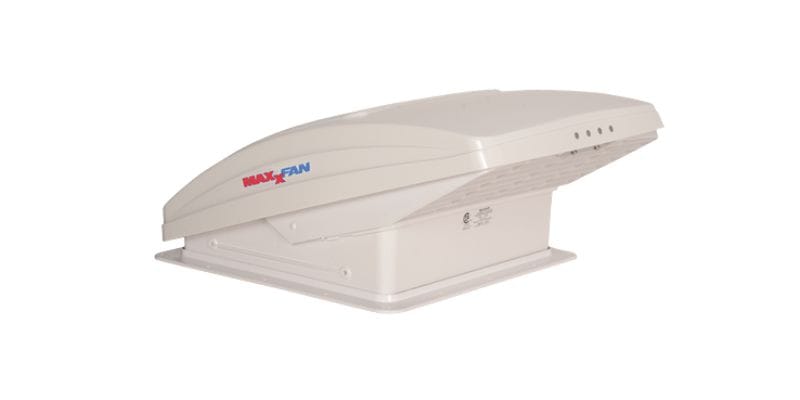
✔ Pros
- Rain dome lets it run in the wet
- 10 reversible speeds and a thermostat
- Remote and powered lift included
- Available in 356mm and 400mm
✗ Cons
- Dearest of the mainstream options
- Heavier at 5.4kg
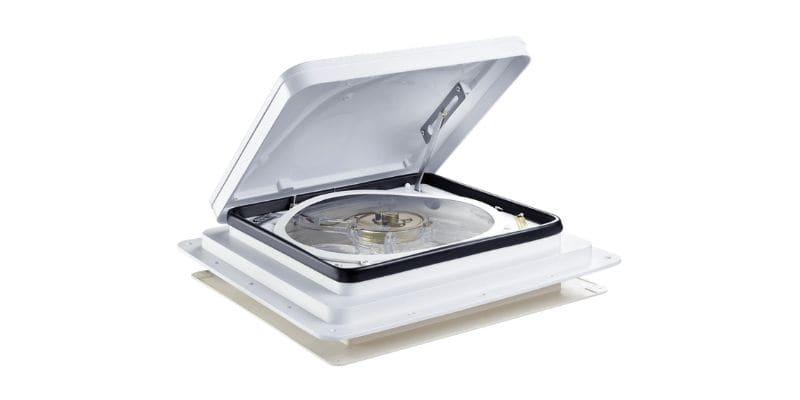
✔ Pros
- Rain sensor auto-closes the lid
- Reversible with thermostat and powered lift
- Quiet 10-blade fan
- Well-supported, proven design
✗ Cons
- Fan stops when the lid closes in rain
- Only 3 speeds on the 3350 (the 7350 is variable)
- Dearer than the MaxxFan Deluxe
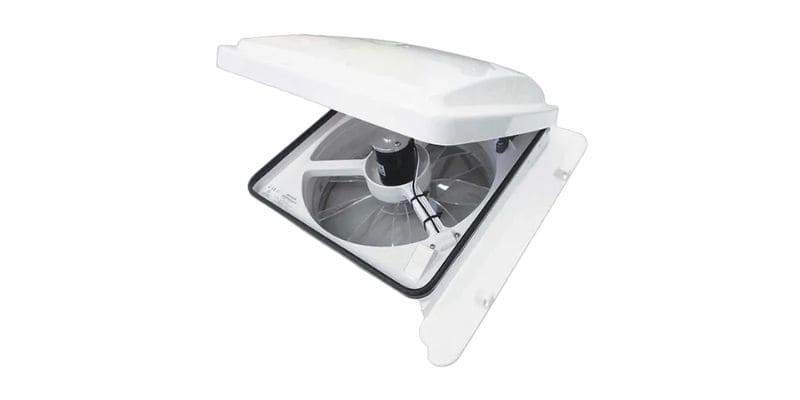
✔ Pros
- Same 10-speed reversible fan and thermostat
- Cheaper than the Deluxe
- Great value for dry-region travel
✗ Cons
- No rain dome, can’t ventilate in the wet
- Weak choice for the tropics
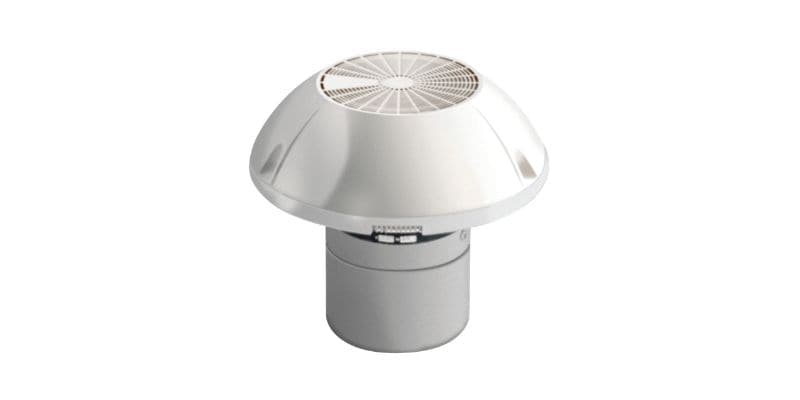
✔ Pros
- Cheap retrofit into an existing vent
- Clears cooking fumes and hot air
- Works as a passive vent when off
✗ Cons
- Higher draw, not an all-nighter
- Not reversible
- Only 1 year warranty
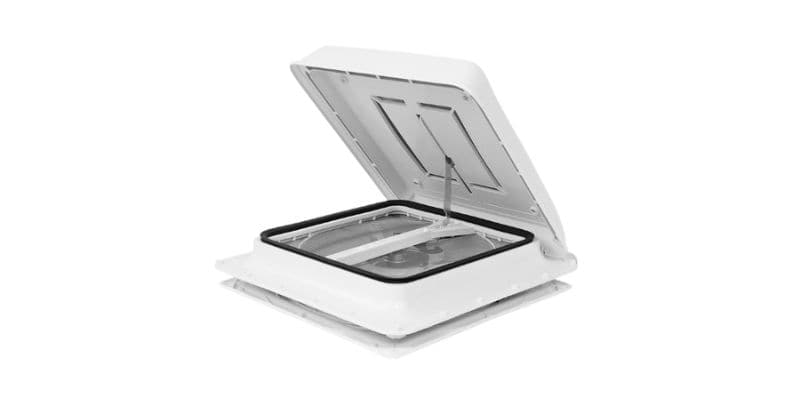
✔ Pros
- Purpose-built for 400mm apertures
- Powerful reversible fan
- Complete roof-hatch replacement
✗ Cons
- Dearest option here
- Roof-cutting install
- Often backordered
Quick Comparison Table
Here is how the picks stack up side by side.
| Fan | Price | Fits | Reversible | Rain Handling | Best For |
|---|---|---|---|---|---|
| MaxxAir MaxxFan Deluxe Pick | ~$520 to $570 | 356 & 400mm | Yes | Rain dome, runs in wet | Tropics, full-timers |
| Dometic Fan-Tastic Vent 3350 | ~$645 | 360mm | Yes | Sensor auto-closes lid | Set-and-forget |
| MaxxAir MaxxFan Plus Value | ~$469 | 356mm | Yes | Lid-down only | Dry inland travel |
| Dometic 12V Extraction Fan (GY11) Budget | $239.95 | Existing vent | No | Dome, lid-down | Cheap retrofit |
| Fiamma Turbo-Vent 160 Premium | ~$789.95 | 400 × 400mm | Yes | Lid-down | Euro 400mm vans |
Frequently Asked Questions
What size hole do I need to cut?
Most Australian vans use the standard 360mm by 360mm hatch, the same as a 14 inch opening, which suits the MaxxFan, Fan-Tastic and GY11. Some European-built vans use a 400mm by 400mm aperture, which is where the Fiamma Turbo-Vent or the 400mm MaxxFan Deluxe come in. Measure your existing hole before you buy.
Will a roof vent fan flatten my battery?
No. The multi-speed units draw as little as 0.16A on low and around 2.5A flat out, so any decent solar and battery setup runs one all night without noticing. Only the simple extractor fans draw enough to matter, and they are meant for short bursts anyway.
Can I really run it in the rain?
Only the MaxxFan Deluxe keeps ventilating with the lid raised, thanks to its rain dome. The Fan-Tastic closes its lid on a rain sensor, which protects the van but stops the fan. The MaxxFan Plus and budget vents are lid-down only, so you lose airflow when it rains. If you travel the humid north, the rain dome is the feature to pay for.
Do I still need cabin fans if I fit one of these?
Yes. A roof vent fan moves air in and out of the van; a cabin fan moves air across you where you sit or sleep. They do different jobs, and most vans want both. A roof extractor plus one or two hardwired cabin fans is the comfortable setup.
- Roof vent fans pull hot air out and reverse to draw cool air in, a job cabin fans can’t do.
- Check your cut-out first: 360mm for most Aussie vans, 400mm for some Euro vans.
- Rain handling is the big divider. The MaxxFan Deluxe runs in the wet, the Fan-Tastic auto-closes, budget vents are lid-down only.
- The MaxxFan Deluxe is the best all-round buy; the MaxxFan Plus is the dry-region value pick; the GY11 is the cheap retrofit.
- Fit a roof vent fan and keep your cabin fans too. They work together.
Comment (0)