
Finding the right solar regulator can make the difference between a reliable solar setup and one that leaves you with flat batteries. After testing dozens of controllers on the road, we’ve identified the models that deliver consistent performance for Australian big lap conditions.
The best solar regulators balance efficiency, reliability, and ease of use. You want MPPT technology for maximum power harvest, robust construction for outback conditions, and features that actually matter when you’re weeks from civilisation.
What to Look for in a Solar Regulator
The regulator is your solar system’s brain. It controls how power flows from panels to batteries, protecting your expensive lithium setup while maximising charge efficiency. Here’s what separates the good from the great:
- MPPT Technology: Maximum Power Point Tracking delivers 15-30% more power than PWM controllers, especially in marginal conditions.
- Current Rating: Choose 25% above your panel’s maximum current output. A 400W panel produces ~23A, so pick a 30A+ controller.
- Voltage Window: Ensure it handles your panel voltage range. Most 12V panels work with 100V input controllers.
- Battery Compatibility: Must support your battery chemistry. Lithium profiles are essential for LiFePO4 batteries.
- Monitoring Options: Built in displays or smartphone connectivity help track performance and diagnose issues.
- Temperature Compensation: Adjusts charging voltage based on battery temperature for optimal battery life.
- Build Quality: IP rating of 21 minimum for caravan installations. Look for conformal coating on circuit boards.
- Load Output: Some controllers include a switched load output for lights or pumps, though many installers prefer separate switching.
Size your controller for future expansion. Adding panels later is easier with a controller that has capacity to spare.
Best Solar Regulators Reviewed
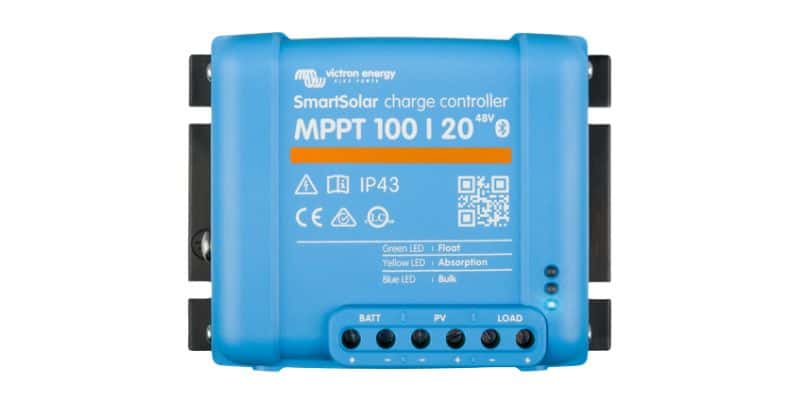
✔ Pros
- Excellent VictronConnect app with detailed data logging
- Proven reliability across thousands of installations
- Comprehensive battery type support including custom profiles
- Temperature compensation with optional sensor
- Compact form factor fits most electrical bays
- 5 year warranty with strong Australian support
✗ Cons
- No built in display requires phone or separate monitor
- Premium pricing compared to generic alternatives
- Bluetooth range limited to about 10 metres
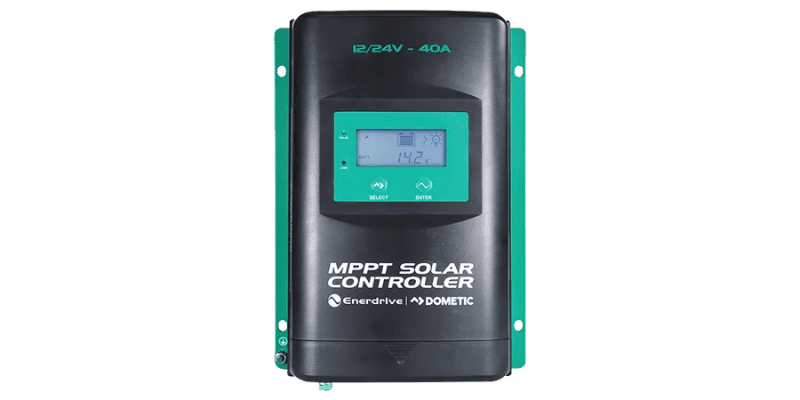
✔ Pros
- Built in LCD display shows key metrics without additional hardware
- Higher 40A current rating suits larger solar arrays
- Australian designed with local support network
- Comprehensive lithium battery profiles pre loaded
- Temperature sensor included in the box
- Load output with low voltage disconnect protection
✗ Cons
- Larger footprint requires more mounting space
- Display not backlit, harder to read in low light
- No smartphone connectivity for remote monitoring
- Higher price point than basic MPPT controllers
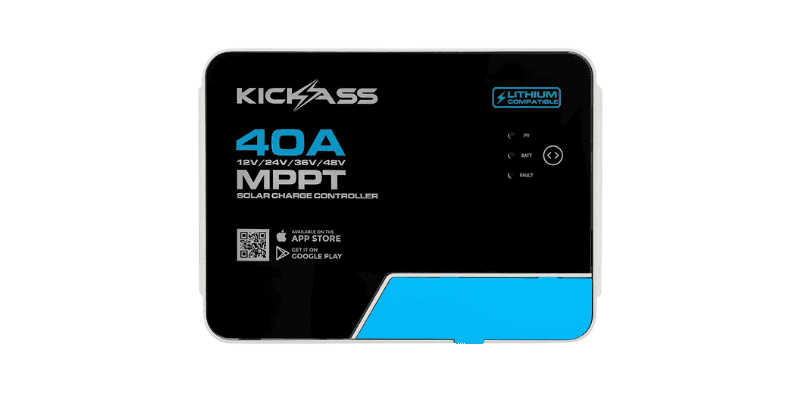
✔ Pros
- Wide voltage range supports multiple system configurations
- Australian designed with local support and warranty
- Backlit LCD display readable in all conditions
- Higher 150V input voltage for series panel connections
- Temperature compensation with included sensor
- Comprehensive lithium and traditional battery profiles
✗ Cons
- Larger size requires adequate mounting space
- No smartphone connectivity or app support
- Higher price point than basic controllers
- Limited data logging capabilities
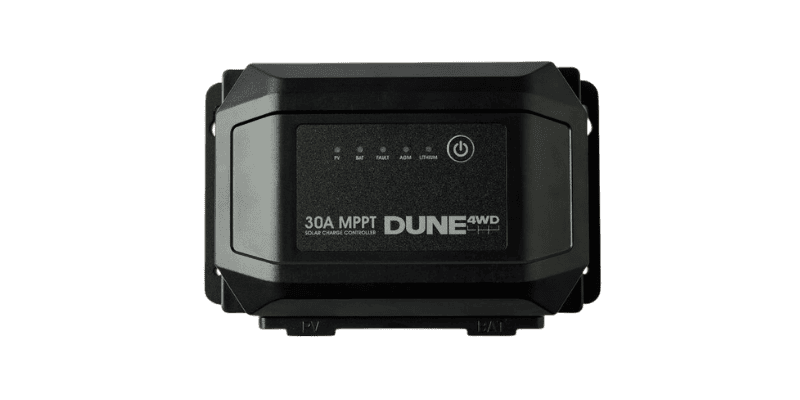
✔ Pros
- Excellent value for genuine MPPT technology
- Higher 30A output suits larger budget installations
- Basic LCD display included
- Compact size suits most installations
- Load output with programmable settings
- Available through Anaconda retail network
✗ Cons
- No smartphone connectivity or app support
- Basic build quality compared to premium brands
- Limited battery type customisation
- No temperature sensor included
- Display difficult to read in bright conditions
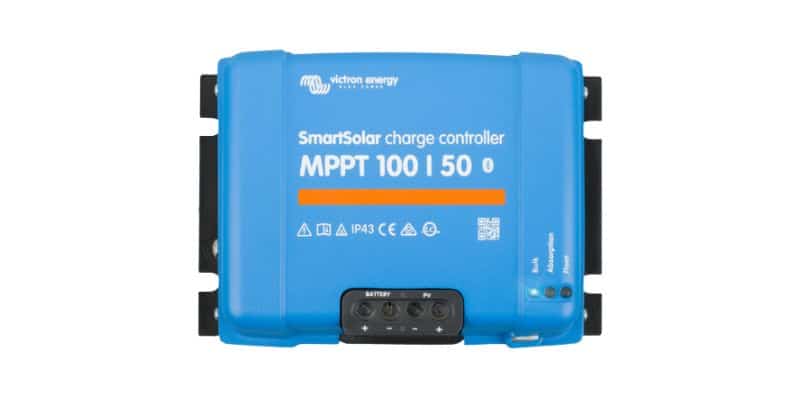
✔ Pros
- High 50A output handles large solar arrays
- Same excellent VictronConnect app and features
- Suitable for high power installations up to 650W
- MC4 solar connectors reduce wiring complexity
- Advanced MPPT algorithm with battery life optimisation
- 5 year warranty with proven reliability
✗ Cons
- Significantly larger mounting footprint
- Higher price reflects the increased capacity
- Overkill for smaller solar installations
- No built in display option
Quick Comparison Table
| Controller | Price | Current Rating | Max Solar Power | Best For |
|---|---|---|---|---|
| Victron SmartSolar 100/20 Best Overall | ~$195 | 20A | 260W (12V) | Most caravan setups |
| Enerdrive MPPT 40A Built in Display | ~$289 | 40A | 520W (12V) | Larger systems with display needs |
| KickAss 40A MPPT | ~$229 | 40A | 520W (12V) | Multi voltage system support |
| Dune 4WD 30A MPPT Budget Pick | ~$129 | 30A | 390W (12V) | Budget conscious travellers |
| Victron SmartSolar 100/50 | ~$425 | 50A | 650W (12V) | Large solar arrays |
Installation Tips
Proper installation ensures your regulator delivers optimal performance and longevity. Mount the controller in a well ventilated area away from direct heat sources. Most electrical bays provide suitable locations, but avoid mounting directly above inverters or battery chargers that generate heat.
Install the temperature sensor on the negative battery terminal for accurate temperature compensation. This significantly extends battery life, especially with lithium setups.
Wire sizing matters more than many realise. Use 6mm² cable for the battery connection on 20A controllers, and 10mm² for 40A+ units. Undersized wiring creates voltage drop that reduces charging efficiency and wastes solar energy.
Fuse protection is mandatory on the positive battery connection. Install a 30A fuse for 20A controllers and 60A for 40A+ units. Mount the fuse within 300mm of the battery positive terminal for safety compliance.
Always connect the battery before connecting solar panels to prevent damage during commissioning. Most controllers include reverse polarity protection, but correct wiring prevents unnecessary stress on protection circuits.
Configure the battery type settings correctly during commissioning. AGM, Gel, and Lithium batteries require different charging profiles. Using incorrect settings reduces battery life and can void warranties. Most quality controllers include preset profiles for common battery types.
- The Victron SmartSolar 100/20 offers the best balance of features, reliability, and smartphone connectivity for most caravan setups
- Choose the Enerdrive 40A if you prefer built in display monitoring and have larger solar arrays
- MPPT technology delivers significantly better performance than PWM controllers, especially in marginal lighting conditions
- Size your controller for 25% above your maximum panel output and consider future expansion plans
- Proper installation with correct wire sizing and battery type configuration maximises performance and equipment life
- Temperature compensation and quality fusing are essential for safety and optimal charging
Comment (0)