
An under bunk air conditioner keeps the weight off your roof, drops your centre of gravity and cools the bedroom quietly. It suits a narrow but real group of big lappers. This guide covers who it actually makes sense for, what to look for, and the two units genuinely worth buying in Australia.
Under Bunk vs Rooftop: The Honest Picture
Let’s be straight from the outset: rooftop reverse cycle units dominate the Australian market, and for most vans they are the right call. They cool hard, they leave your internal storage alone, and every caravan park in the country has seen a thousand of them. If you are cooling a big, hot van and you are not fussed about a box on the roof, buy a rooftop and move on.
An under bunk air conditioner, also called an under bench unit, is the specialist’s choice. Instead of sitting on the roof it mounts low and central, usually in a bed base, a cupboard or a dedicated locker, and pushes cold air through ducting to outlets around the van. That layout buys you three things a rooftop cannot.
- No weight up high: a rooftop unit puts 30 to 44kg on top of the van, which raises your centre of gravity and hurts tow stability. Under bunk mounting keeps that mass low, which off road travellers and anyone chasing a settled tow really notice.
- No roof penetration or height: nothing cut into the roof, nothing adding 20 or so centimetres of height to worry about under low branches, awnings or a carport.
- A quieter bedroom: the compressor and fan are not sitting 30 centimetres above your head. Ducted air arrives through a vent, so the noise you sleep with is airflow, not machinery.
The trade off is space. An under bunk unit lives inside the van, so it eats a chunk of storage you would otherwise use for gear. It is ducted by design, which means a more involved install, and the units on the Australian market top out at 2.4kW of cooling, so they only suit smaller to mid sized vans up to around 5.5 metres. Push one into a big, poorly insulated van in a Top End summer and it will never catch up.
Work out where the unit will physically live before you fall in love with the idea. Measure the bed base or locker you plan to sacrifice, then decide whether that storage is worth trading for the lower centre of gravity.
What to Look For
The under bunk market is small, so the decision is simpler than choosing a rooftop. These are the four things that actually matter.
- Weight, and where it sits: the whole point of going under bunk is keeping mass low. A lighter unit mounted in the bed base does far more for your handling than the raw kilos suggest, because it is the height of the weight that hurts tow stability, not just the amount.
- Ducted by design: every under bunk unit is ducted, so plan your outlet positions. One outlet at the bedroom and one in the living area spreads the cold evenly and is a big part of why these run quietly where you sleep.
- The storage trade off: you are giving up a cupboard or a slab of bed base. Be honest about what you store now and whether you can lose it. This is the single biggest reason people regret, or love, an under bunk install.
- Install complexity and power draw: under bunk fitting is more involved than dropping a rooftop into an existing vent hole, so budget for a professional install unless you are very handy. On the upside these units sip power, around 4A running, which is friendlier on a powered site meter and more realistic off grid than a fixed speed rooftop.
Our Top Under Bunk Picks
Under bunk is a two horse race in Australia. The premium Truma and the value Houghton are the genuine choices, and they are pitched at different buyers.
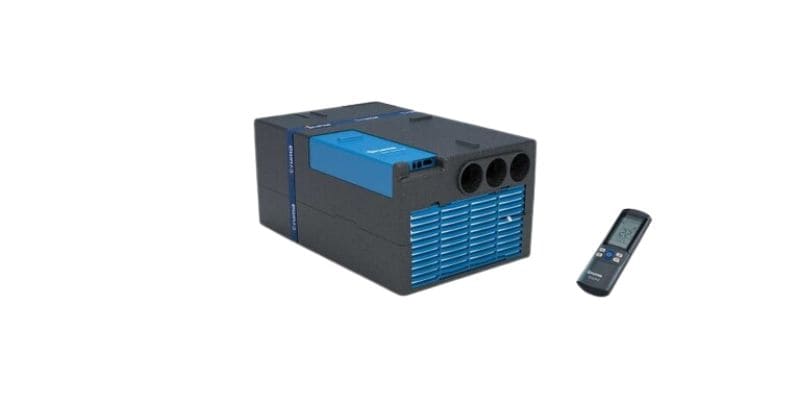
✓ Pros
- Very light and mounts low for the best handling
- Quiet in the bedroom, ducted by design
- Frugal on power at around 4.2A
- German build with genuine Australian support
✗ Cons
- Eats a cupboard or bed base for storage
- 2.4kW caps it at smaller and mid sized vans
- More involved install than a rooftop

✓ Pros
- Same 2.4kW cooling for hundreds less
- Cheap, widely stocked Houghton parts
- Slightly higher heating output at 2.0kW
- Low running draw around 4.3A
✗ Cons
- Fixed speed, so startup surge and on/off cycling
- Value tier build, not Truma refinement
- 2.4kW limits it to smaller vans
Quick Comparison Table
Here is how the two under bunk options stack up side by side.
| Unit | Price | Cooling | Weight | Draw | Best For |
|---|---|---|---|---|---|
| Truma Saphir Comfort RC Pick | ~$2,040 | 2.4kW | 23.5kg | ~4.2A | Light, quiet, off grid friendly |
| Houghton Belaire HB2400 DUB Value | ~$1,300 to $1,600 | 2.4kW | 30kg | ~4.3A | Budget internal install |
Do not oversize your hopes for 2.4kW. These units are matched to smaller and mid sized vans up to around 5.5 metres. In a large or poorly insulated van, or in tropical humidity, an under bunk unit will run flat out and still lose the fight. That is a job for a rooftop.
So, Should You Go Under Bunk?
Under bunk is not the default, and this guide is deliberately short because the choice is narrow. Go this way if you have a smaller to mid sized van and you genuinely value low weight, settled towing and a quiet bedroom over the storage you will lose. Off road tourers and anyone touchy about roof height and centre of gravity are the natural buyers.
Everyone else is better served by a rooftop. If your van is large, if you travel in the tropics, or if internal storage is precious, a rooftop reverse cycle unit will cool harder and cost you nothing inside. It is worth reading the rooftop and portable guides below before you commit, and if you plan to run any of these away from mains power, the off grid battery guide is essential homework.
- Rooftop units dominate the market and suit most vans. Under bunk is the specialist choice for low weight, tow stability and a quiet bedroom.
- The Truma Saphir Comfort RC is the best under bunk unit: light at 23.5kg, quiet, frugal on power and well supported.
- The Houghton HB2400 DUB gives the same 2.4kW cooling for hundreds less, at the cost of fixed speed cycling.
- Both cap out at 2.4kW, so they only suit smaller to mid sized vans up to around 5.5 metres. Do not try to cool a big or tropical van with one.
- Budget for a professional install, and plan which cupboard or bed base you are willing to give up.
Comment (0)