
Your Esky isn’t cutting it anymore. After a few days on the road, you’re buying ice every second day, throwing away spoiled food, and realising that warm beer at sunset isn’t quite the dream you signed up for. A proper 12V car fridge changes everything, but the options can be overwhelming.
Compressor fridges, thermoelectric coolers, different sizes, power draws, and price points from $200 to $2,000. You need to understand what actually matters before you spend your money.
This guide cuts through the marketing fluff and explains the real differences between car fridge types. You’ll understand which technology suits your travel style, what size you actually need, and how much power draw you can handle. By the end, you’ll know exactly which direction to head.
- Car Fridge Types Explained
- Compressor Fridges: The Gold Standard
- Thermoelectric Coolers: Budget Option
- Size and Capacity: What You Actually Need
- Power Draw and Battery Requirements
- Portable vs Built-In Installation
- Budget Breakdown by Travel Style
- Quick Comparison: All Fridge Types
- Our Recommendations by Use Case
Car Fridge Types Explained
Two main technologies dominate car fridges, and each works completely differently. Understanding these differences is crucial because they determine everything from power consumption to cooling performance to price.
Compressor fridges work like your home refrigerator. A small compressor pumps refrigerant through coils, providing excellent cooling efficiency. They’re the most expensive upfront but use less power and cool faster than other types.
Thermoelectric coolers (also called Peltier coolers) use electricity to move heat from one side of a ceramic plate to the other. No moving parts, completely silent, but limited cooling capacity and higher power consumption.
Most car fridges will flatten your starter battery overnight if run directly from it. You’ll need a dual battery setup, a portable power station, or solar panels to keep your fridge running when the engine is switched off. Factor this into your total budget before you buy.
Don’t get caught up in brand loyalty. The cooling technology matters more than the badge on the front. A good thermoelectric cooler beats a poor compressor fridge.
Compressor Fridges: The Gold Standard
Compressor fridges dominate the serious touring market for good reason. They cool quickly, maintain precise temperatures, and handle Australian heat better than any other technology.
How they work: A 12V or 24V compressor pumps refrigerant through evaporator and condenser coils. The system cycles on and off to maintain your set temperature, typically using 40 to 60 watts when running.
Performance advantages: Compressor fridges can achieve freezer temperatures (down to -18°C) and aren’t affected by ambient temperature. Whether it’s 15°C or 45°C outside, your fridge maintains the same internal temperature.
Power efficiency: Despite higher upfront power draw, compressor fridges cycle on and off. A quality 40L unit typically uses 20 to 30Ah per day in moderate conditions, making them the most efficient option for extended trips.
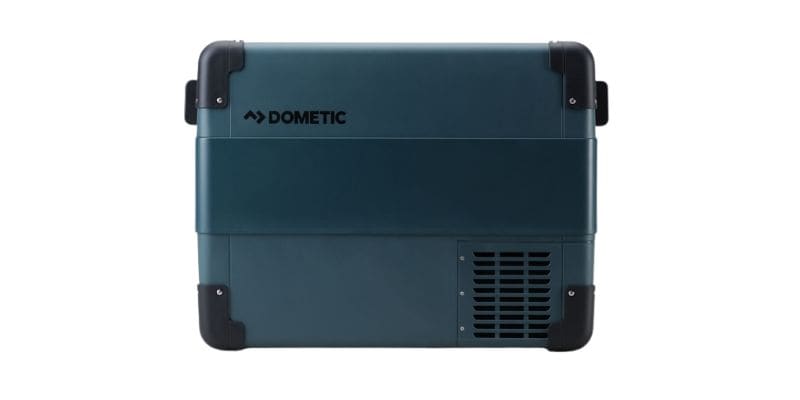
~$899
The downsides: Higher purchase price ($800 to $2,000), compressor noise (though modern units are much quieter), and vibration sensitivity during transport. They also draw high current when starting up, requiring quality wiring.
Best for: Extended touring, hot climates, anyone wanting freezer capability, and situations where you need precise temperature control. The extra cost pays for itself in food savings and convenience.
Thermoelectric Coolers: Budget Option
Thermoelectric coolers get a bad rap, but they have their place in the car fridge ecosystem. Understanding their limitations helps you decide if they suit your travel style.
How they work: Peltier effect technology uses electricity to move heat. No refrigerant, no compressor, just solid state cooling. Dead silent and vibration proof, but with significant performance trade-offs.
Cooling limitations: Most thermoelectric coolers can only achieve 15 to 20°C below ambient temperature. On a 40°C day, your “fridge” runs at 20 to 25°C. Fine for drinks, useless for dairy or meat.
Power consumption reality: Despite marketing claims, good thermoelectric coolers draw 50 to 60 watts continuously. No cycling means they use 60 to 80Ah per day, making them less efficient than quality compressor fridges.
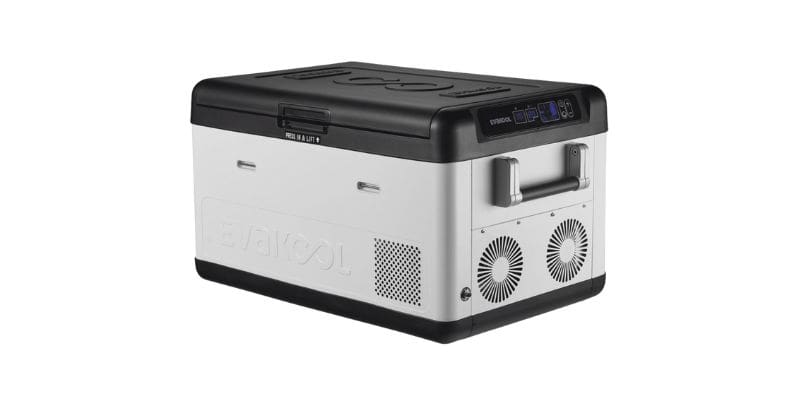
~$1,159
When they make sense: Weekend trips, supplementary cooling alongside an Esky, drink cooling in mild weather, or situations where absolute silence matters. They’re also excellent for heating food.
The verdict: Thermoelectric coolers work within their limits, but those limits are significant. They’re not suitable for extended touring or hot weather food storage, despite what the marketing suggests.
Size and Capacity: What You Actually Need
Fridge capacity marketing is misleading. Manufacturers quote gross volume, but usable space is 20 to 30% less once you account for the cooling system, insulation, and practical packing constraints.
Small fridges (20 to 35L): Good for couples on weekend trips or as a drinks fridge. Expect to fit 2 to 3 days of fresh food plus drinks. Popular sizes include 25L and 35L models.
Medium fridges (40 to 60L): The sweet spot for most travellers. A 50L fridge handles 4 to 5 days of food for two people, or 2 to 3 days for a family. Fits in most vehicles without major modifications.
Large fridges (65L+): For families, extended remote travel, or those who prefer bulk shopping. A 75L fridge can hold a week’s groceries for four people, but requires significant installation space.
Dual zone fridges offer two compartments at different temperatures. Great for keeping drinks cold while maintaining frozen food, but expect to pay 30 to 40% more than single zone models.
Shape matters too: Chest style fridges offer better cooling efficiency and capacity utilisation. Upright fridges fit better in tight spaces but lose cold air every time you open the door.
Realistic capacity planning: Count on using 60 to 70% of quoted capacity for practical packing. A 50L fridge effectively stores about 35L of usable groceries once you account for ice packs, awkward shapes, and air circulation needs.
Power Draw and Battery Requirements
Power consumption determines your battery requirements and ultimately your freedom to free camp. Understanding real world power draw helps you size your electrical system correctly.
Compressor fridge reality: A quality 40L compressor fridge uses 20 to 30Ah per day in moderate conditions, but this can double in extreme heat or with frequent opening. Factor 40 to 50Ah daily consumption for hot weather touring.
Starting current matters: Compressor fridges draw 8 to 12 amps when starting, requiring adequate wiring and battery capacity. Cheap batteries or thin wiring cause voltage drops that prevent proper starting.
Thermoelectric power drain: Continuous 50 to 60 watt draw equals 60 to 80Ah daily consumption on 12V systems. Higher than most people expect and more than equivalent compressor fridges in most conditions.
Battery requirements by fridge type: Plan 100Ah minimum battery capacity for compressor fridges, 150Ah for thermoelectric units. Add 50% extra capacity for hot weather or extended cloudy periods if using solar.
Keeping your fridge running off the grid: A dual battery system is the most common solution for touring vehicles. Your second battery powers the fridge without risking your starter battery. Pair it with a solar panel or two and you’ll cover most of your daily consumption without needing to drive. A portable power station like a Jackery or EcoFlow is a good alternative if you don’t want a permanent installation, especially for occasional use or if you’re still building out your setup.
Portable vs Built-In Installation
Installation flexibility affects how and where you can use your fridge. Portable units offer versatility, while built-in installations provide security and space efficiency.
Portable advantages: Move between vehicles, take to campsites, use at home during power outages, and no permanent vehicle modifications required. Easier to service and replace when needed.
Portable limitations: Takes up floor space, requires securing while driving, and creates trip hazards. Power cables often run through passenger areas, and theft risk when leaving the vehicle.
Built-in benefits: Maximises cargo space efficiency, permanent power connections, better security, and professional appearance. Often includes custom cabinetry that adds vehicle value.
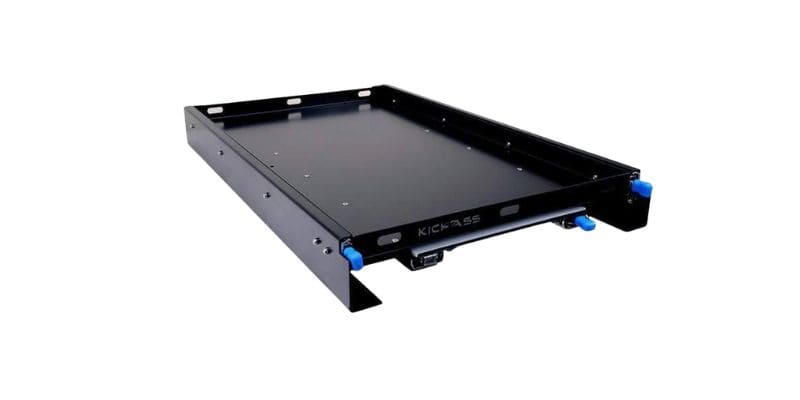
Various sizes available
Ventilation requirements: All fridges need airflow around the cooling system. Portable units handle this automatically, but built-in installations require planned ventilation gaps and sometimes cooling fans.
The hybrid approach: Many people use fridge slides or drop-in brackets. Provides some built-in benefits while maintaining portability for camping or service access.
Budget Breakdown by Travel Style
Your travel style determines which features matter and where to spend your money. A weekend camper has very different needs from someone doing a full lap.
Weekend and holiday camping ($800 to $900): An entry level compressor fridge is the smart buy even for short trips once you factor in Australian summer heat. The Engel Eclipse MR40F 38L ~$899 is a proven performer that won’t let you down in the heat. If budget is tight, a thermoelectric cooler works for mild weather weekend trips but don’t rely on it through summer.
Regular touring ($899 to $1,500): This is where most tourers should be spending. The Dometic CFX2 45L ~$899 hits the sweet spot for couples doing regular trips, while the Bushman 52L ~$1,475 steps up the capacity without breaking the budget.
Serious expedition and full time travel ($1,200 to $2,000): You want something built to last and big enough to reduce shopping stops. The EvaKool DU250-DZ 50L Dual Zone ~$1,159 gives you independent fridge and freezer zones in one unit. Worth every dollar for extended remote travel where you can’t afford spoiled food.
Cheap compressor fridges under $600 often use inferior compressors that fail within 2 to 3 years. Spending extra on proven brands saves money long term.
Hidden costs to consider: Installation brackets, wiring upgrades, battery capacity increases, and potentially solar panels. Budget an extra $300 to $800 for a complete fridge system depending on your current electrical setup.
Quick Comparison: All Fridge Types
| Type | Price Range | Daily Power Use | Cooling Performance | Best For |
|---|---|---|---|---|
| Compressor Most Popular | $800 to $2,000 | 20 to 40Ah | Excellent all conditions | Extended touring |
| Thermoelectric | $200 to $600 | 60 to 80Ah | Limited by ambient | Weekend trips, mild weather |
Our Recommendations by Use Case
For weekend camping: The Engel Eclipse MR40F 38L ~$899 is a reliable compressor fridge freezer that won’t let you down even in summer heat. Compact enough for most vehicles and backed by Engel’s reputation for durability.
For regular holiday touring: The Bushman 52L ~$1,475 offers compressor reliability with good capacity for couples on extended trips. Australian made with solid warranty support.
For serious expedition work: The EvaKool DU250-DZ 50L Dual Zone ~$1,159 gives you independent fridge and freezer zones in a single 50L unit. Keep meat frozen and drinks cold simultaneously without compromising on either. The best choice for remote travel where flexibility matters.
The all rounder choice: For most Australian tourers, a 40 to 50L compressor fridge hits the sweet spot. Enough capacity for extended trips, reliable cooling in hot weather, and reasonable power consumption with a proper dual battery or power station setup.
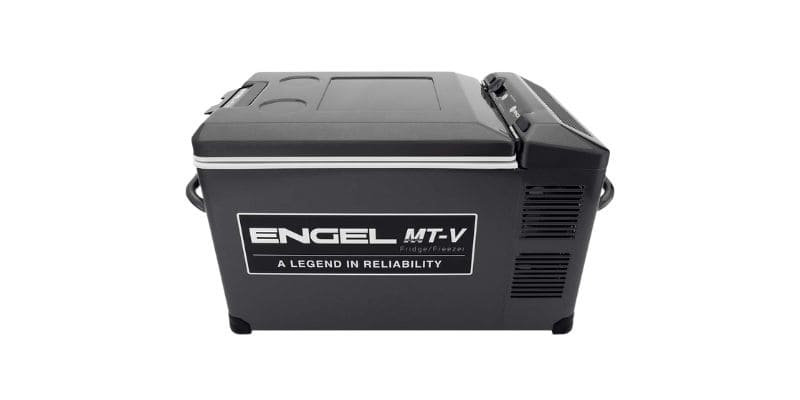
~$1,249
- Compressor fridges are the gold standard for extended touring, offering reliable cooling in all conditions despite higher upfront costs
- Thermoelectric coolers work for weekend trips in mild weather but can’t handle hot Australian conditions or provide freezer capability
- Most car fridges will flatten your starter battery overnight. A dual battery setup, solar panels, or a portable power station is essential for keeping your fridge running off the grid
- Plan 40 to 50L capacity for couples, 60L+ for families, and budget 20 to 40Ah daily power consumption for compressor fridges
- Installation costs add $300 to $800 to your total budget when factoring wiring, batteries, and mounting hardware
Comment (1)