
Running out of water at a remote campsite is a mistake you only make once. Water monitoring systems tell you exactly how much water you have left in your fresh, grey, and black water tanks, so you can plan refills and manage consumption rather than guessing. If your caravan doesn’t have a tank monitor (or has one that doesn’t work reliably), adding one is a cheap, high-impact upgrade.
Understanding Caravan Water Capacity
Most caravans carry between 80 and 160 litres of fresh water, depending on size and configuration. A typical family uses 20 to 40 litres per day for drinking, cooking, washing dishes, and basic hygiene. This means your water supply will last 2 to 8 days before needing a refill, depending on your tank size and consumption habits.
Grey water tanks (from sinks and showers) are usually similar capacity to fresh water tanks, while black water tanks (toilet waste) are typically smaller at 40 to 80 litres. Knowing your exact levels across all three systems prevents the embarrassment of overflowing grey tanks or running out of fresh water when you’re planning to stay another few days.
What Type of Monitor Do You Need?
Tank level monitors: The essential system. Shows how much water remains in each tank as a percentage or volume. Most important for fresh water (so you don’t run dry) and grey/black water (so you don’t overflow).
Water flow meters: Track how much water you’re using in real-time. Helpful for understanding consumption patterns and teaching kids (or adults) about water conservation. The Outback Explorer Bluetooth Water Flow Meter ($60) connects to your phone and tracks daily usage.
Hot water temperature monitors: Show when your hot water system has heated up, preventing wasted gas or electricity. Usually built into comprehensive monitoring systems rather than standalone units.
Combined water and power monitors: All-in-one systems that show battery levels, solar input, and tank levels on a single display. More expensive but tidier installation. Popular options include the BMPRO Odyssey system.
Technical Types of Water Monitors
Probe-style (resistive) sensors: The most common factory-fitted option. Metal probes inside the tank measure water level at set points (typically a quarter, half, three-quarters, full). Cheap and simple, but notorious for inaccuracy as probes corrode, get coated with mineral deposits, or give false readings. If your factory-fitted level gauge seems unreliable, this is probably why.
Ultrasonic/non-contact sensors: Mount externally on the tank (no contact with water). Use ultrasonic pulses to measure distance to the water surface. Far more accurate and reliable than probes because nothing corrodes or fouls. Give continuous level readings rather than just quarter increments. Around $100 to $250 per tank.
Pressure-based sensors: Measure water pressure at the bottom of the tank, which increases proportionally with water depth. Accurate and reliable. Some require a fitting to be installed in the tank; others clamp externally. Around $80 to $200 per tank.
App-based systems: Modern monitors connect via Bluetooth to your phone, giving you tank levels at a glance on an app. Convenient but dependent on phone battery and Bluetooth range.
Best Monitor Brands
BMPRO: The Australian market leader for caravan monitoring equipment. Their systems range from basic tank level indicators to comprehensive management displays that monitor everything from batteries to water to gas. Well-supported through dealer networks Australia-wide.
RV Electronics: Specialises in aftermarket caravan electronics including tank gauges and monitoring systems. Good reputation for reliable, affordable products that are easy to retrofit to existing caravans.
Topargee: Known for robust, Australian-designed caravan accessories. Their monitoring products are built to handle harsh conditions and integrate well with other Topargee systems.
Mopeka: Originally famous for gas bottle monitors, now makes excellent ultrasonic water tank sensors that integrate with Victron and other premium electrical systems.
Platypus: Offers combined monitoring solutions that track both tank levels and water filter condition, appealing to travellers who want comprehensive water system oversight.
Our Recommendations
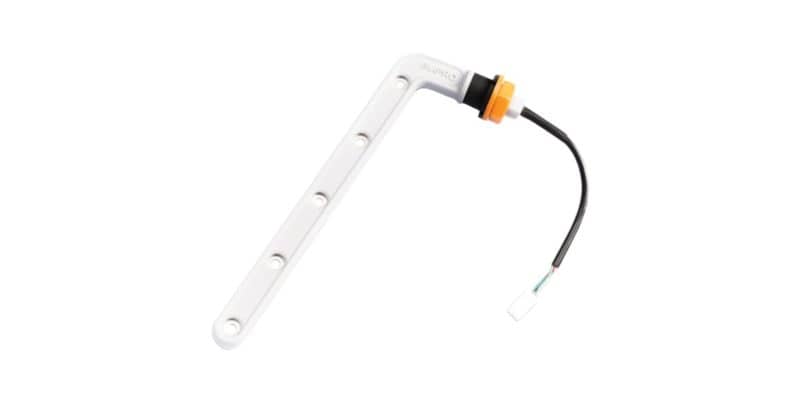
✔ Pros
- Affordable
- Reliable
- Australian support
- Easy installation
✗ Cons
- Still uses probe technology that can eventually corrode
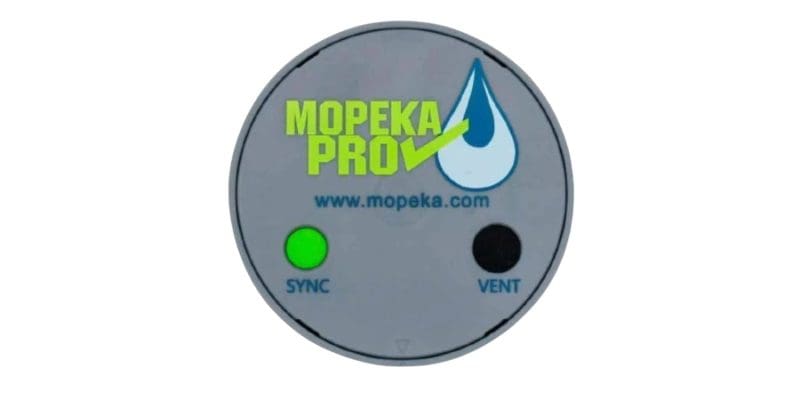
✔ Pros
- Most accurate
- No corrosion issues
- Bluetooth connectivity
- Continuous readings
✗ Cons
- Higher price
- Requires smartphone app
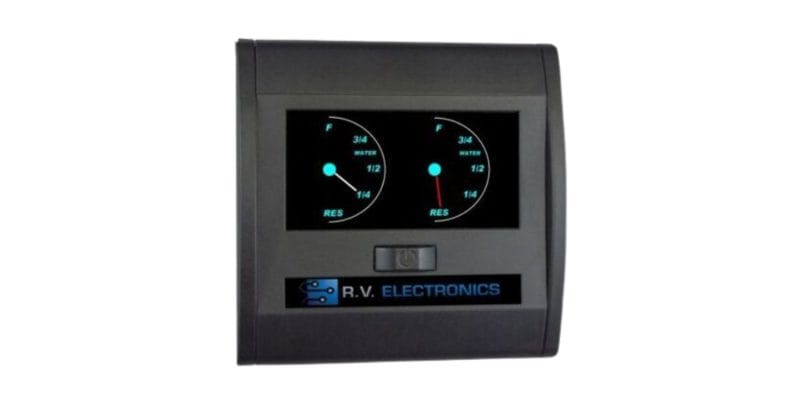
✔ Pros
- Monitors two tanks
- Dedicated display
- Good value
✗ Cons
- Still uses probe technology
- Basic display
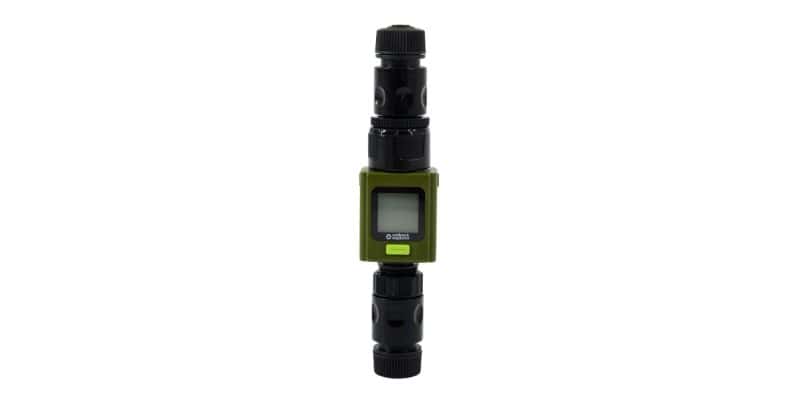
✔ Pros
- Tracks usage patterns
- Very affordable
- Easy app interface
✗ Cons
- Shows flow, not tank levels
- Requires inline installation
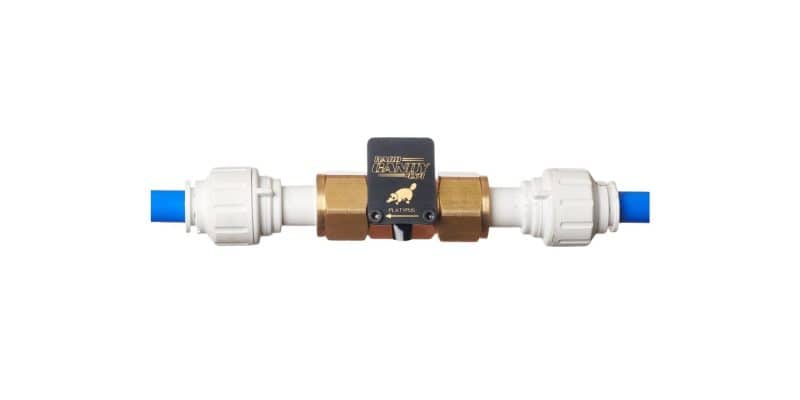
✔ Pros
- Monitors tanks and filters
- Comprehensive system
- Filter alerts
✗ Cons
- Higher price
- More complex installation
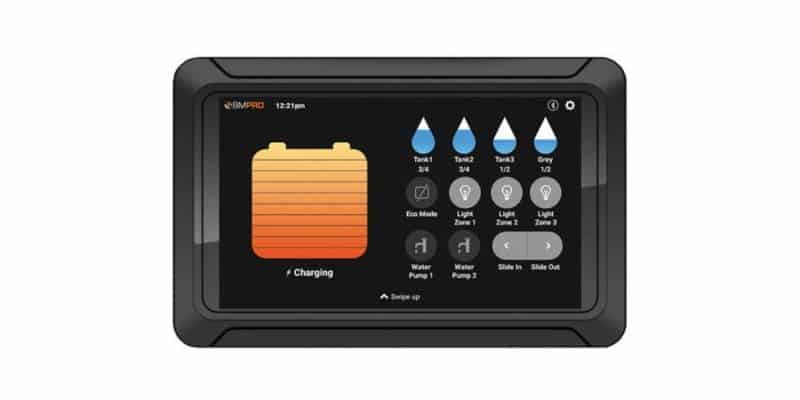
✔ Pros
- Complete system monitoring
- Touchscreen interface
- Tidies the control panel
✗ Cons
- Very expensive
- Complex installation
- Overkill for water-only monitoring
If your factory-fitted water level gauge is unreliable (and many are), retrofit an ultrasonic sensor rather than trying to fix the probes. External-mount sensors are easier to install, more accurate, and don’t corrode.
- Most caravans carry 80 to 160 litres of fresh water, lasting 2 to 8 days depending on family size and usage.
- Ultrasonic/non-contact sensors are far more reliable than factory-fitted probe-style monitors.
- The BMPRO Dipper (~$105) offers excellent value for upgrading unreliable factory gauges.
- Consider flow meters and combined systems for comprehensive water management.
Comment (0)