
Your water pump is the quiet workhorse that turns a tank of water into pressure at every tap, the shower and the toilet. When you are off-grid, it is the difference between a working van and hauling a bucket to the sink. It is also one of the most misunderstood parts of a caravan, and one of the first to give up if you buy the wrong one or run it the wrong way.
If your factory pump has died, gone noisy, or you just want more flow in the shower, this guide covers how a caravan water pump works, what to look for when buying, and the five pumps and upgrades we would actually fit. Every recommendation is a 12V demand pump suited to Australian van life, with real prices and where to buy.
How your caravan water pump works
Nearly every caravan uses a 12V demand pump. It draws water from your fresh tank and pushes it through the lines under pressure. The pump switches on automatically when it senses a pressure drop (you open a tap) and switches off when pressure builds back up (you close it). You do not turn it on and off for each use. Switch it on at the control panel and leave it to cycle as needed.
When you plug into mains water at a caravan park, the mains pressure bypasses the pump entirely, and the pump should not run. Most vans have a check valve that stops mains water back-flowing into the tank. Understanding this demand cycle matters when you are buying, because flow rate, noise and pump cycling are the three things that separate a pump you notice from one you forget is even there.
What to look for when buying a water pump
Most caravan pumps look alike and quote similar specs, but a few details decide whether you get a quiet, reliable pump or a rattly one that wears out in a year.
- Flow rate: Measured in litres per minute (LPM). Around 11 LPM suits most vans. Step up to 15 LPM if you want a stronger shower or run several outlets at once.
- Pressure and cycling: A higher cut-off pressure (45 to 55 PSI) and internal bypass technology reduce the annoying on-off pulsing at low flow.
- Noise: The pump is often mounted near the bedroom. A rubber-mounted base and a quiet diaphragm design are worth paying for if the 2am toilet flush wakes the van.
- Self-priming and run-dry safe: Non-negotiable for van life. Self-priming means it pulls water up without manual filling, and run-dry safe means an empty tank will not instantly kill it.
- Mounting footprint: Check the screw-hole spacing matches your old pump. A different footprint means re-drilling the mount.
- Filter and warranty: Most pumps require an inlet strainer to be fitted or the warranty is void. Factor the filter into the price if it is not included.
- Power draw: Amps matter when you are off-grid. Lower draw is easier on the battery, though most demand pumps only run in short bursts.
Signs it’s time to replace your pump
Before you buy, work out whether the pump is actually the problem. These are the classic symptoms and what they mean.
Pump running with no taps open: This almost always means a leak somewhere in the system. The pump senses the pressure drop from the leak and keeps cycling to chase it. Turn the pump off and check every connection, tap and the hot water system before you condemn the pump.
Pulsing or surging at low flow: A rhythmic on-off-on-off when a tap is barely open is normal for a demand pump. You do not need a new pump; you need an accumulator tank, which smooths the cycles out (more on that below).
No water flow: Check the pump is switched on, the tank has water, and the inlet strainer is not clogged with debris before assuming the pump is dead.
Genuinely louder or weaker over time: This is the real replacement trigger. Typical pump life is three to seven years depending on use. Once it gets noticeably noisier or loses pressure, it is on the way out.
Turn the pump off when the tank is empty and when you connect to mains water. Running dry can overheat and burn out a pump, and while many have thermal protection, you should not rely on it.
The 5 best caravan water pumps and upgrades
Four pumps to suit different vans and budgets, plus the one small upgrade that improves any pump setup. Prices are current at the time of writing and move around, so check before you buy.
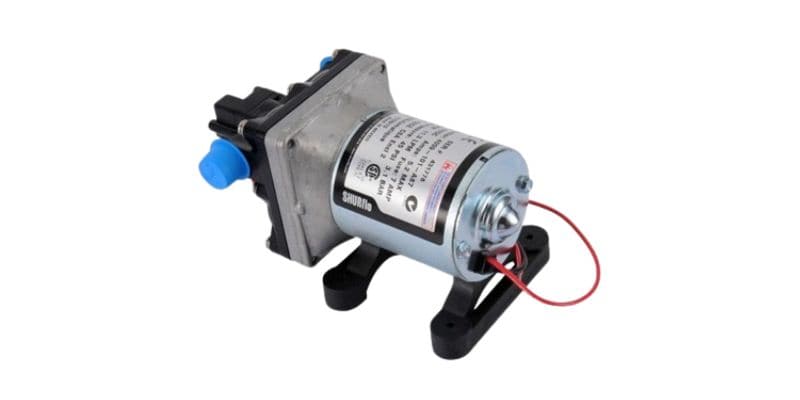
✔ Pros
- Fits most vans out of the box
- Runs dry without damage
- Spares available everywhere
- Quiet for a diaphragm pump
✗ Cons
- Filter needed to keep warranty valid
- Lower flow than the 4048
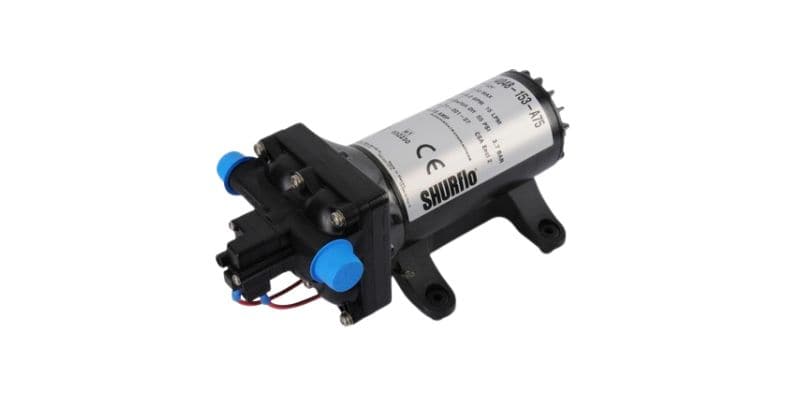
✔ Pros
- Higher flow for better showers
- Quieter with reduced cycling
- Built-in check valve
- Runs dry, thermally protected
✗ Cons
- Roughly double the price of a 4009
- Slightly different base footprint to check
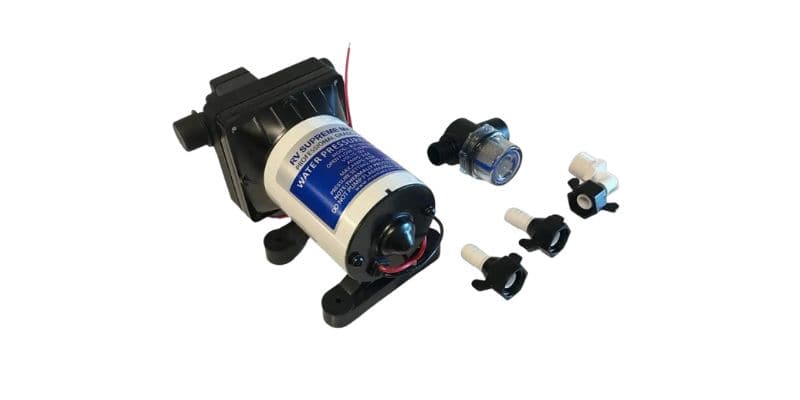
✔ Pros
- Very quiet, rubber-mounted
- Filter and fittings included
- Industry-standard mount
- Cheaper than a comparable Shurflo
✗ Cons
- Lower flow than the 4009 and 4048
- Fewer spare parts than Shurflo
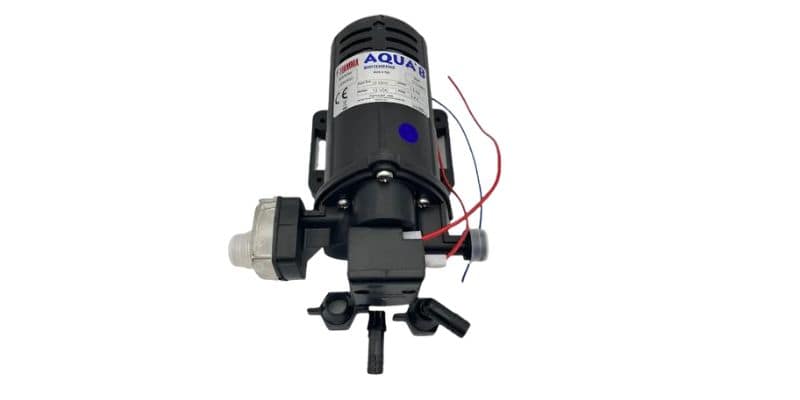
✔ Pros
- Integrated cleanable filter
- Silent Plate keeps noise low
- Light and compact
- Runs dry, resists limescale
✗ Cons
- Lower flow than the Shurflo pumps
- Fewer AU stockists
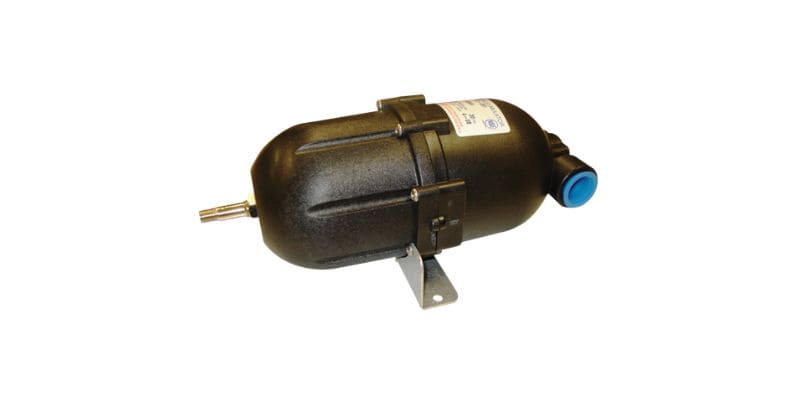
✔ Pros
- Stops pulsing and chattering
- Extends pump life
- Quick, cheap install
- Works with any demand pump
✗ Cons
- Takes up a little cupboard space
- Pre-charge needs occasional checking
Whichever pump you buy, fit the inlet strainer it came with or a separate filter. It keeps grit out of the pump, extends its life, and on the Shurflo pumps it is a condition of the warranty.
Water pump comparison at a glance
Here is how the four pumps and the accumulator stack up on the specs that matter in a van.
| Product | Price | Flow / Type | Best For |
|---|---|---|---|
| Shurflo 4009 Best Overall | ~$120 to $180 | 11.3 LPM, 45 PSI | Standard replacement |
| Shurflo 4048 | ~$350 | 15 LPM, 55 PSI | Stronger showers |
| Seaflo RV Supreme MK2 Best Value | ~$140 to $200 | 9.5 LPM, 55 PSI | Quiet, value swaps |
| Fiamma Aqua 8 | ~$90 to $130 | 7 to 10 LPM | Small vans and campers |
| Shurflo Accumulator Tank | ~$50 to $80 | Inline upgrade | Stopping pump pulsing |
The verdict: which pump to buy
For most Big Lappers, the Shurflo 4009 is the answer. It is the pump your van probably shipped with, it fits without fuss, spares are everywhere, and it does the job reliably for years. If your old pump has died and you just want it working again, buy the 4009 and move on.
Spend up on the Shurflo 4048 if you want a genuinely better shower or a quieter van, and you are happy to pay around $350 for it. Go the Seaflo RV Supreme MK2 if noise is your main complaint and you want to save some money, accepting slightly lower flow. The Fiamma Aqua 8 is the pick for a smaller rig where light weight and a built-in filter matter more than raw flow.
Whatever you choose, add a Shurflo accumulator tank. For $50 to $80 it stops the pulsing, quietens the whole system and extends the life of the pump you just bought. It is the cheapest upgrade with the biggest payoff in any caravan water system.
- The Shurflo 4009 is the safe default replacement for most vans. Buy it if in doubt.
- Step up to the 4048 for higher flow and less noise, or the Seaflo RV Supreme MK2 for a quiet, cheaper alternative.
- Fit the inlet filter your pump came with to protect it and keep the warranty valid.
- Add an accumulator tank to any setup to stop pulsing and extend pump life.
Your pump is one part of a bigger water system. For how it all connects, and the related gear worth getting right, start with the guides below.
Comment (0)