
Why Every Caravan Needs a Brake Controller
A brake controller is the box of electronics that tells your caravan’s electric brakes how hard to brake, and when. Press the brake pedal in your tug and the controller sends a signal back down the trailer plug to the magnets in your van’s brakes, so the whole rig slows down together instead of the van shoving the car through the intersection.
It isn’t optional. In Australia, any trailer or caravan with an ATM over 2,000kg must have brakes that can be operated from the driver’s seat, and that means a brake controller. Once you’re over 2,500kg you also need an automatic breakaway system that applies the brakes if the van ever separates from the car. Given most touring vans sit somewhere between 2.5 and 3.5 tonnes loaded, this applies to almost everyone doing the lap.
Beyond the legal side, a good controller is what makes towing feel planted. It stops the van pushing you into corners, takes the white-knuckle out of long descents, and saves your tug’s brakes from doing all the work over thousands of kilometres. It’s cheap insurance for the most safety-critical part of your setup.
Towing weight rules and breakaway requirements vary slightly between states. Always confirm the regulations where your van is registered before you hit the road.
Proportional vs Time-Based (and Where It Mounts)
There are two things that really separate one brake controller from another: how it decides how much to brake, and where it lives.
Proportional vs Time-Based Braking
A proportional controller has an accelerometer inside it. It senses exactly how hard you’re slowing down and matches the van’s braking to suit, so a gentle stop is gentle and an emergency stop is firm. It’s smoother, safer, and easier on your brake linings. A time-based (or time-delayed) controller just ramps up to a preset braking level every time you touch the pedal, regardless of whether you’re easing off at a roundabout or standing on it. They’re cheaper and almost extinct for good reason. Every controller in this guide is proportional, and that’s the only type we’d recommend for the lap.
Where the Controller Mounts
This is where the modern options split apart:
- In-cab (hard-wired): The traditional setup. The brains hide behind the dash and you get a dial or knob within reach. The Redarc Tow-Pro Elite and Hayman Reese Compact IQ work this way. Tidy and permanent, but tied to one vehicle.
- Trailer-mounted: The controller bolts to the A-frame of the van and there’s no cab wiring at all. The Elecbrakes 2 is the standout here. Because the brains travel with the van, any capable vehicle can tow it.
- Plug-in: The unit “T”s into the 7-pin plug between car and van. No tools, fully portable. The Curt Echo is the easiest install going.
If more than one vehicle in the family ever tows the van, a trailer-mounted or plug-in controller saves you wiring up every car. Wire one in-cab unit per tug and the costs add up fast.
What to Look For When Buying
Once you’ve settled on proportional braking and a mounting style, here’s what actually matters:
- Proportional braking: Non-negotiable. Smoother stops and far less wear on your van’s brakes.
- A user-controlled / manual mode: Worth having if you tow on dirt, sand or gravel, where you sometimes want to dial in braking manually.
- ATM rating: Make sure the controller is rated for your van’s loaded weight. Most handle up to 4,500kg ATM.
- 12V and 24V compatibility: Important if your tug runs a 24V system. Confirm before buying.
- Vehicle-specific wiring kit: Hard-wired units usually need a plug-and-play harness for your make and model. Factor in the extra cost.
- Sway control: Some newer units bundle it in. A genuine bonus for big, tall vans in crosswinds and overtaking trucks.
- Australian support: Can you get it serviced or replaced on the road? This matters more than saving twenty dollars.
- How many vehicles will tow it: One tug means an in-cab unit is fine. Two or more, look trailer-mounted or plug-in.
Our Top Picks for 2026
These are the brake controllers worth your money this year, covering every mounting style and budget. Redarc doesn’t have an affiliate link with one of our usual retailers but it’s still the best controller on the market, so it leads the list.
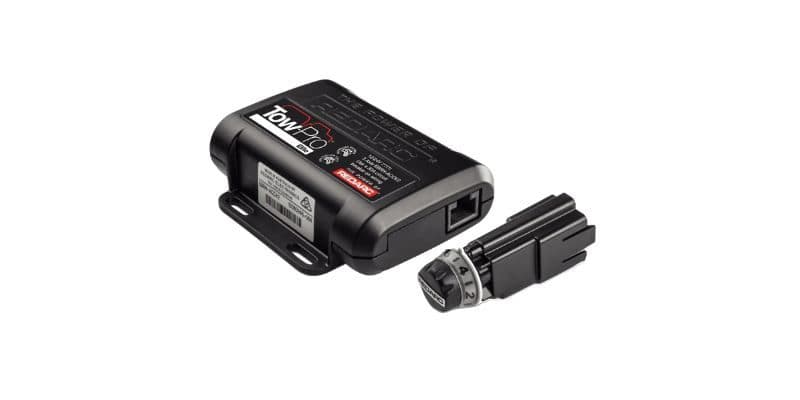
✓ Pros
- Two modes: smooth on road, controllable off-road
- Aussie made and supported everywhere
- Flush dash knob looks factory-fitted
- AL-KO ESC compatible
✗ Cons
- Needs a vehicle-specific wiring kit (extra cost)
- Best fitted by an auto electrician
- No app or screen
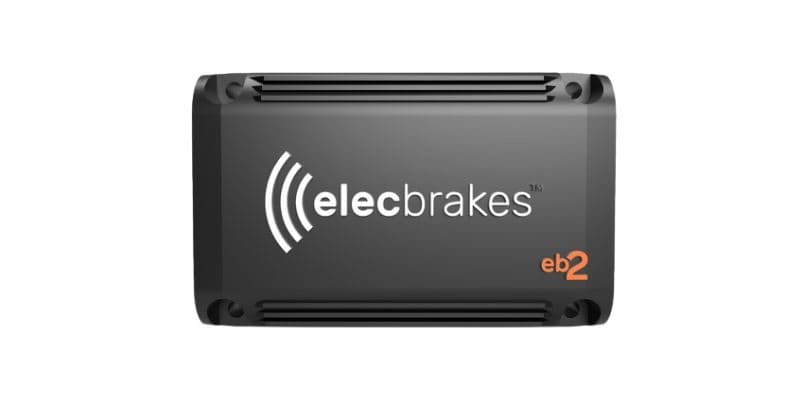
✓ Pros
- Zero cab wiring, fits in 10 minutes
- Moves between vehicles instantly
- Sway control built in
- Aussie made and IP-rated for the rough stuff
✗ Cons
- Dearer up front than in-cab units
- Needs a connection adaptor/loom (sold separately)
- Relies on your phone unless you buy the remote
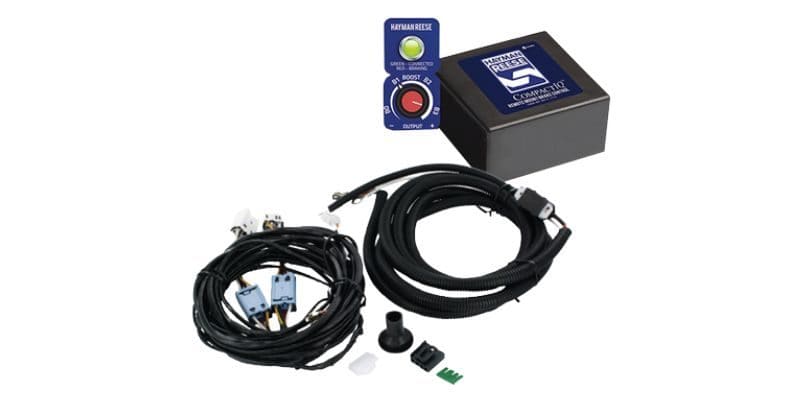
✓ Pros
- Trusted brand, easy to support on the road
- Remote dial keeps the dash clean
- Plug-and-play harness included in the bundle
- Manual override and adjustable Boost
✗ Cons
- Harness is vehicle-specific, adds cost
- No off-road / user-controlled mode
- No app or sway control
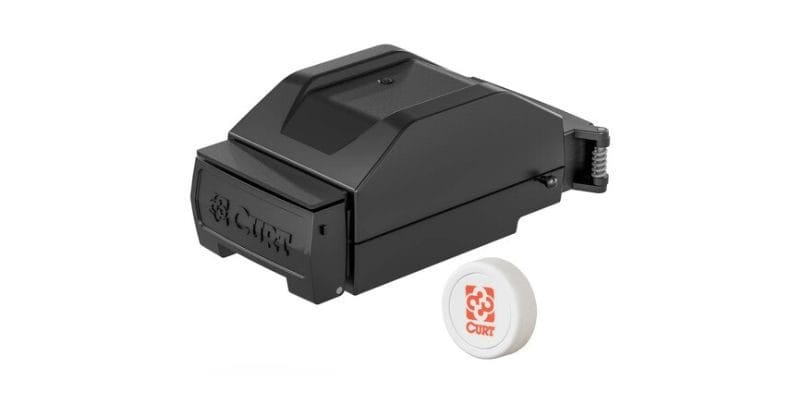
✓ Pros
- Cheapest proportional option here
- No wiring and no tools
- Swaps between vehicles instantly
- App-based monitoring and profiles
✗ Cons
- Runs through your phone, no physical dial
- Check the correct pin for your van
- Less rugged than a trailer-mounted unit
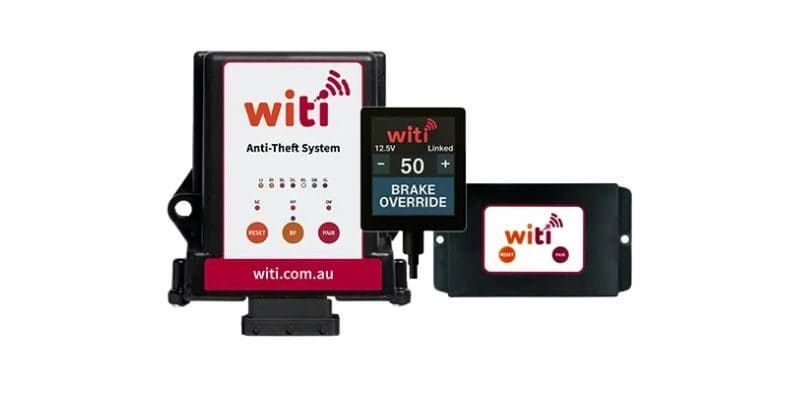
✓ Pros
- Three systems in one integrated platform
- Immobilises the van if theft is detected
- Live GPS tracking and recovery
- Australian engineered
✗ Cons
- Far dearer than a standalone controller
- Longer professional install
- GPS tracking is a paid subscription
Quick Comparison Table
Here’s how our picks stack up side by side:
| Controller | Price | Type | Mounting | Best For |
|---|---|---|---|---|
| Redarc Tow-Pro Elite V3 Pick | ~$365 | Proportional + user | In-cab dash knob | On & off-road towing |
| Elecbrakes 2 | ~$699 | Proportional (trailer) | On the A-frame | Multiple tow vehicles |
| Hayman Reese Compact IQ Value | ~$349 | Proportional | Remote dial | Value & easy support |
| Curt Echo | ~$249 | Proportional (plug-in) | Plugs into 7-pin | Budget / no wiring |
| WiTi All-in-One | ~$1,200 | Wireless + security | Trailer + dash screen | Brakes + anti-theft + GPS |
Installation & Wiring
How hard the install is comes down entirely to the type of controller you’ve chosen.
- Plug-in (Curt Echo): Genuinely a two-minute job. Unplug the trailer, plug the Echo into the car’s socket, plug the van into the Echo. Done.
- Trailer-mounted (Elecbrakes): Four screws onto the A-frame plus an adaptor lead. Most people manage it in the driveway in around ten minutes.
- In-cab hard-wired (Redarc, Hayman Reese): This is the one to take seriously. The controller ties into your vehicle’s brake light signal and battery, so unless you’re confident with auto wiring, get an auto electrician to fit it. A vehicle-specific plug-and-play harness makes the job cleaner and avoids cutting factory wires.
Whatever you fit, calibrate it before you tow loaded. Find a quiet stretch, do a few stops, and adjust the gain until the van brakes firmly without the wheels locking. A controller set too low is as dangerous as none at all.
7. Frequently Asked Questions
Is a brake controller a legal requirement?
Yes. Any trailer or caravan with an ATM over 2,000kg must have brakes operable from the driver’s seat, which means a brake controller. Over 2,500kg you also need an automatic breakaway system. The rules vary slightly by state, so check the regulations where your van is registered.
Proportional or time-based, which should I get?
Proportional, almost every time. It senses how hard you’re slowing and matches the van’s braking to suit, which is smoother and far easier on your brakes. Time-based units ramp to a preset level regardless and feel clunky. Every controller in this guide is proportional.
Can I install one myself?
Plug-in units like the Curt Echo and trailer-mounted ones like the Elecbrakes, yes, easily. Hard-wired in-cab controllers like the Redarc are a job for an auto electrician unless you’re confident, because they tie into your vehicle’s brake signal and battery.
Do I need one for a small single-axle camper?
If its ATM is over 2,000kg, yes. Plenty of small campers come in under that and don’t need one, while heavier models do. Check the compliance plate to be sure.
- A proportional brake controller is a legal must-have for caravans over 2,000kg ATM
- The Redarc Tow-Pro Elite V3 is the best all-round choice, especially if you leave the bitumen
- The Elecbrakes 2 is the smartest pick when more than one vehicle tows the van
- The Curt Echo gets you proportional braking for the least money and zero wiring
- Get hard-wired units fitted by an auto electrician, and confirm your state’s towing rules before you go
- The Complete Buyers Guide To Setting Your Caravan Up For Safe Towing
- The Complete Buyers Guide To Caravan Sway Controllers
- The Complete Buyers Guide To Caravan Weight Distribution Hitches
- The Complete Buyers Guide To Caravan Security Systems
- State-by-State Towing Rules in Australia: Quick Reference Guide
Comment (0)