
1. Why Caravans Sway (and Why It Matters)
Sway is the side-to-side fishtailing that can take hold of a caravan at speed. It starts small, a gentle wag triggered by a passing truck, a gust of crosswind, a dip in the road or a steering correction, and if nothing damps it, each swing feeds the next until the van is whipping the back of your tow vehicle around. At highway speeds it’s one of the genuinely dangerous things that can happen while towing, and it’s claimed plenty of rigs on Australian roads.
The underlying cause is usually a combination of speed, weight distribution and a van that’s a bit tail-heavy or under-loaded on the ball. Getting your loading and tow ball weight right is the first line of defence, and a weight distribution hitch helps too. But once sway starts, you want something actively working to kill it. That’s what a sway controller does.
A sway controller is not a substitute for correct loading. Get at least 10 percent of your van’s weight on the tow ball and keep heavy gear low and over the axles first. Sway control is your safety net, not your setup.
2. The Three Ways to Control Sway
There are three approaches, and they’re not mutually exclusive. Plenty of well-set-up vans run a friction bar or WDH-integrated control as well as an electronic system.
Friction Sway Bars
The cheapest and simplest option. A friction bar clamps between your tow hitch and the van’s A-frame and adds resistance to the pivot point, damping sway before it builds. They’re manual (you set the friction, and you remove or release them before reversing) and they only handle mild sway, but at well under $150 they’re a sensible add-on for lighter vans and camper trailers. They’re designed to work alongside a weight distribution hitch.
Weight Distribution Hitches With Built-In Sway Control
Many weight distribution hitches include cam or friction sway control as part of the system. If you’re already shopping for a WDH, this is often the most efficient way to get both jobs done in one purchase. We cover those in detail in the WDH guide below rather than repeating them here.
Electronic Stability Control (ESC)
The most advanced option. An electronic system mounts under the van, continuously monitors for sway, and when it detects a dangerous wobble it automatically applies the van’s electric brakes, often independently left and right, to pull the rig straight. No driver input needed. This is the gold-standard safety net for heavier touring vans, and it’s what we’d prioritise for the big lap. Note that some brake controllers now build sway control in too, like the Elecbrakes EB2, which we cover in the brake controllers guide.
Electronic stability control needs your van to have electric brakes and a brake controller fitted in the tow vehicle. If you haven’t sorted those yet, do that first.
3. What to Look For When Buying
What matters depends on which approach you’re taking, but here are the things worth weighing up:
- Automatic or manual: Electronic ESC works without you lifting a finger. Friction bars need setting and removing before reversing.
- Sensor type (electronic): Units that combine an accelerometer with a gyroscope tell real sway apart from bumps and corrugations, so fewer false activations off-road.
- Off-road behaviour: Good electronic systems auto-disable on rough tracks so they don’t fire on every pothole. Check this if you head off the bitumen.
- Axle compatibility: Make sure an electronic system supports your van’s number of axles (most cover one to four).
- A-frame fit (friction): Friction bars suit a range of A-frame sizes, typically 3 to 6 inches. Bolt-on kits avoid drilling.
- Installation: Friction bars are DIY. Electronic systems wire into the van’s brakes and are best fitted by an auto electrician.
- Insurance discounts: Some insurers knock money off your premium if you fit a recognised electronic stability system. Worth asking.
4. Our Top Picks for 2026
We’ve split these into the two electronic systems worth your money, then the friction bars for those who want a simple, affordable add-on.
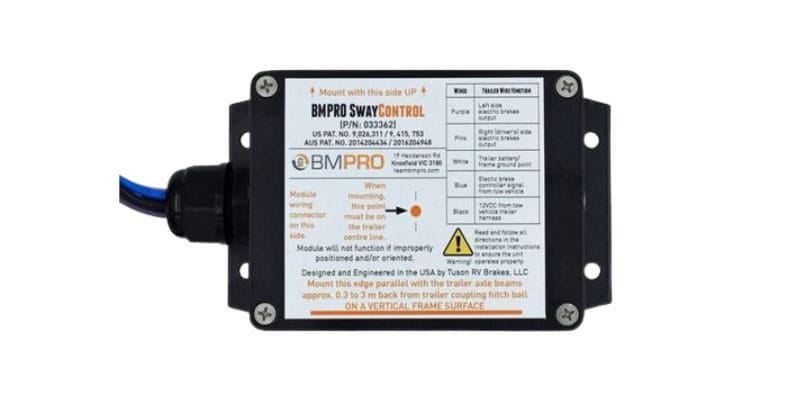
✓ Pros
- Fully automatic, no driver input
- Independent left/right braking
- Auto-disables off-road
- Integrates with Trailsafe breakaway
✗ Cons
- Most expensive option here
- Needs professional installation
- Requires electric van brakes
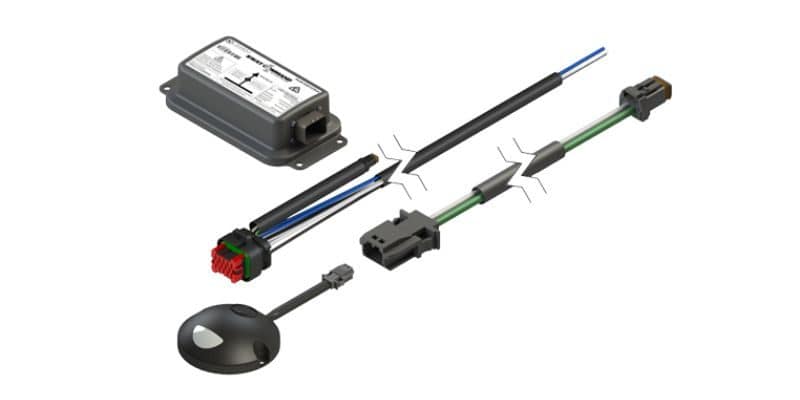
✓ Pros
- Accel + gyro means fewer false triggers
- Genuinely good off-road
- Cheaper than BMPro
- Qualifies for an insurance discount
✗ Cons
- Still needs professional installation
- Requires a compatible brake controller
- Adds a light pod to the front of the van
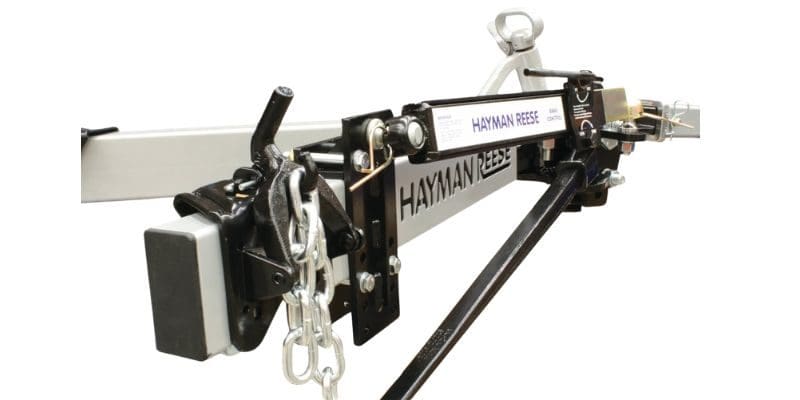
✓ Pros
- Cheap and proven
- No drilling, bolts on
- Removes in seconds for reversing
✗ Cons
- Manual, not automatic
- Only damps mild sway
- Best paired with a WDH
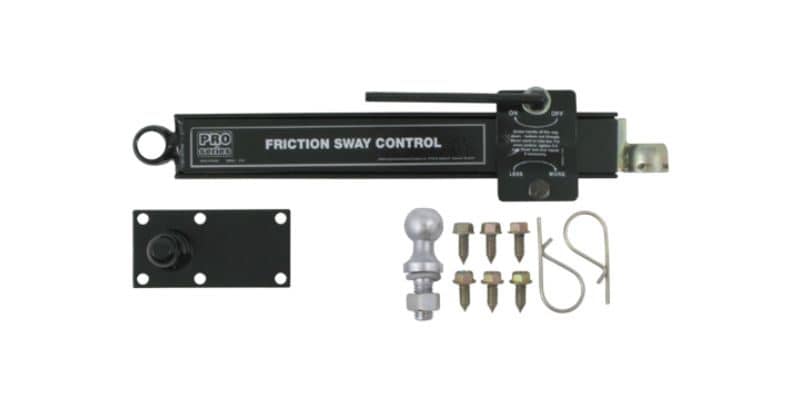
✓ Pros
- Cheapest way to add sway resistance
- Simple and reliable
- Easy DIY fit
✗ Cons
- Manual operation
- Mild sway only
- Release before reversing
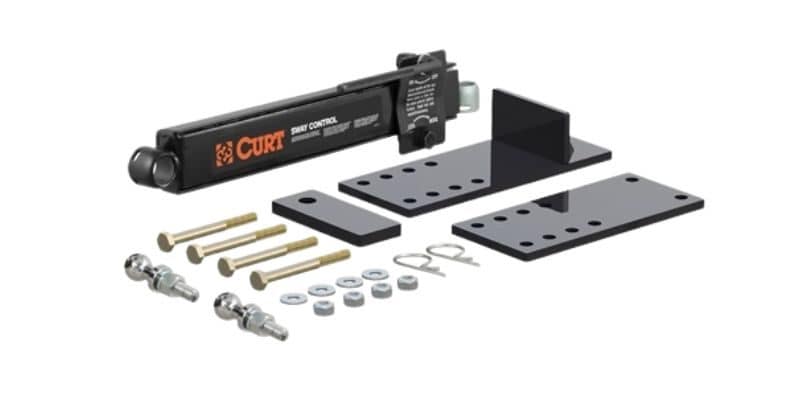
✓ Pros
- Complete kit, less to buy separately
- Reputable towing brand
- Straightforward to fit
✗ Cons
- Manual operation
- Mild sway only
- Release before reversing
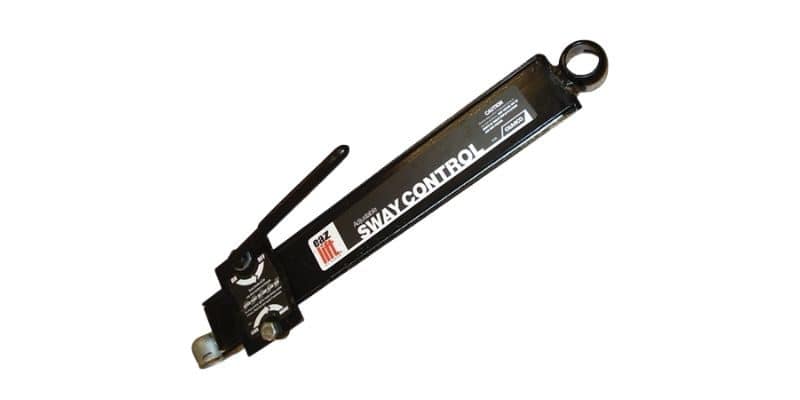
✓ Pros
- Affordable
- Run one or two as needed
- Simple to fit
✗ Cons
- One side only (buy two for heavy vans)
- Manual operation
- Release before reversing
5. Quick Comparison Table
Here’s how the picks stack up side by side:
| Product | Price | Type | How It Works | Best For |
|---|---|---|---|---|
| BMPro SwayControl Pick | ~$1,250 | Electronic ESC | Auto-brakes the van on sway | Hands-off safety |
| LCI Sway Command 1.5 Value | ~$799 | Electronic ESC | Accel + gyro, auto-brakes | Best electronic value |
| Hayman Reese Friction (Bolt-On) | ~$85 | Friction bar | Manual friction at hitch | Best friction / no drill |
| Pro Series Friction | ~$90 | Friction bar | Manual friction at hitch | Budget setups |
| Curt Sway Control Kit | ~$120 | Friction bar | Manual friction (full kit) | All-in-one purchase |
| Eaz-Lift Screw-On | ~$85 | Friction bar (1 side) | Manual friction at hitch | Scaling to a bigger van |
6. Friction or Electronic: Which Should You Buy?
It comes down to your van, your budget and where you travel.
If you’re towing a heavy touring van long distances across the country, an electronic stability system is the one to get. It works automatically, it reacts faster than any human can, and it’s the difference between a heart-stopping wobble that settles itself and one that ends in the gravel. The LCI Sway Command is the value sweet spot for most people, with the BMPro a step up if you want the most capable system going. Many travellers report a noticeable drop in driver fatigue once they’re not constantly bracing for the next gust.
If you’re towing a lighter van or camper trailer, travel shorter distances, or you’re working to a tight budget, a friction bar is a perfectly reasonable choice, especially as a complement to a properly set up weight distribution hitch. Just know its limits: it damps mild sway, it’s manual, and you have to remember to release it before reversing.
Whatever you choose, none of it replaces good loading and the right tow ball weight. Sort the basics first, then add the safety net.
- Correct loading and tow ball weight are your first defence against sway
- For heavy vans on the big lap, electronic stability control is the safety net worth having
- The LCI Sway Command 1.5 is the best electronic value; the BMPro is the most capable
- Friction bars are a cheap, effective add-on for lighter vans, best run with a weight distribution hitch
- Electronic systems need electric van brakes and a brake controller, so sort those first


Comment (0)